
A useful hat pattern needs more than a charming photograph: yarn, measurements, and construction all influence the finished fit. These free crochet hat patterns cover classic beanies, relaxed slouch hats, a bucket style, and an earflap design.
Options include adult accessories and smaller family sizes, so you can choose a practical project without searching a general pattern directory.
Some hats grow in rounds, while others begin as a simple rectangle that is joined and gathered. Choose the method that matches your confidence, or use a small accessory to learn one unfamiliar technique. A cabled body demands different attention from plain double crochet, even when both projects ultimately become winter hats.
The links below lead to original designer pages, where free written directions are available online. Optional printables may cost extra, and selling permissions differ between individual designs. Read the current source before purchasing yarn, especially if you plan to substitute a discontinued fiber or make finished hats for a craft stall.
Quick picks at a glance
| # | Resource | License | Best for |
|---|---|---|---|
| 1 | Sarah Maker Easy Crochet Bucket Hat | Free online pattern; verify finished-item selling permission separately | Summer hats from baby to adult |
| 2 | Make and Do Crew Beginner Ribbed Beanie | Free pattern; finished hats explicitly suggested for sales or donations | Avoiding crown increases |
| 3 | Sewrella Parker Crochet Baby Hat | Free pattern; redistribution rights not granted | Making a simple hat with video guidance |
| 4 | Persia Lou Chunky Ribbed Slouch Hat | Finished-item sales allowed; link requested when possible; no pattern redistribution | Quick textured accessories |
| 5 | Persia Lou Slouchy Shell Crochet Hat | Free for personal use only | Intermediate bottom-up texture |
| 6 | Persia Lou Black Cat Slouch Hat | Finished-item sales allowed; no redistribution or designer-photo use | Playful chunky headwear |
| 7 | Crochet Dreamz Beginner Textured Family Hat | Free online pattern; verify finished-item selling permission separately | Baby through adult sizing |
| 8 | All About Ami Cabled Slouchy Beanie | Free online pattern; verify finished-item selling permission separately | Learning raised cable work |
| 9 | Whistle and Ivy Crochet Plaid Slouchy Hat | Finished-item sales allowed; no pattern redistribution or photo reuse | Deliberate color-change practice |
| 10 | Repeat Crafter Me Polar Bear Earflap Hat | Free online pattern; verify finished-item selling permission separately | Ear coverage and bear details |
Sarah Maker Easy Crochet Bucket Hat
Cotton bucket hat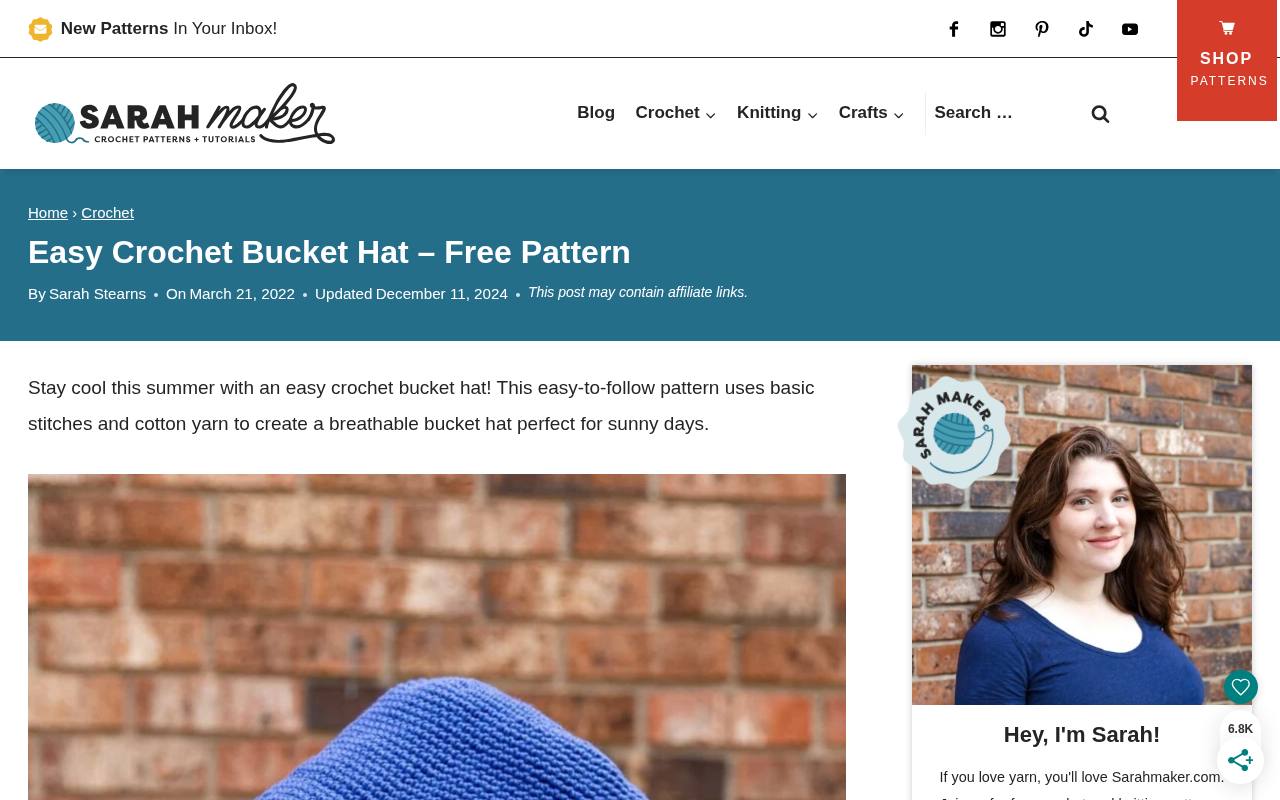
Sarah Stearns creates a seamless bucket hat using single crochet and offset increases that keep the crown round rather than hexagonal. The materials discussion recommends cotton, with Dishie selected for a balance of softness and structure.
Sizes extend from baby through adult extra large, making this a versatile family project. Instructions are free on the page. This is a good option for practicing increases in the round while producing a packable accessory, rather than adding another thick winter beanie to your wardrobe.
- Type
- Cotton bucket hat
- Best for
- Summer hats from baby to adult
- License
- Free online pattern; verify finished-item selling permission separately
- Price
- Free online
Make and Do Crew Beginner Ribbed Beanie
Rectangle beanie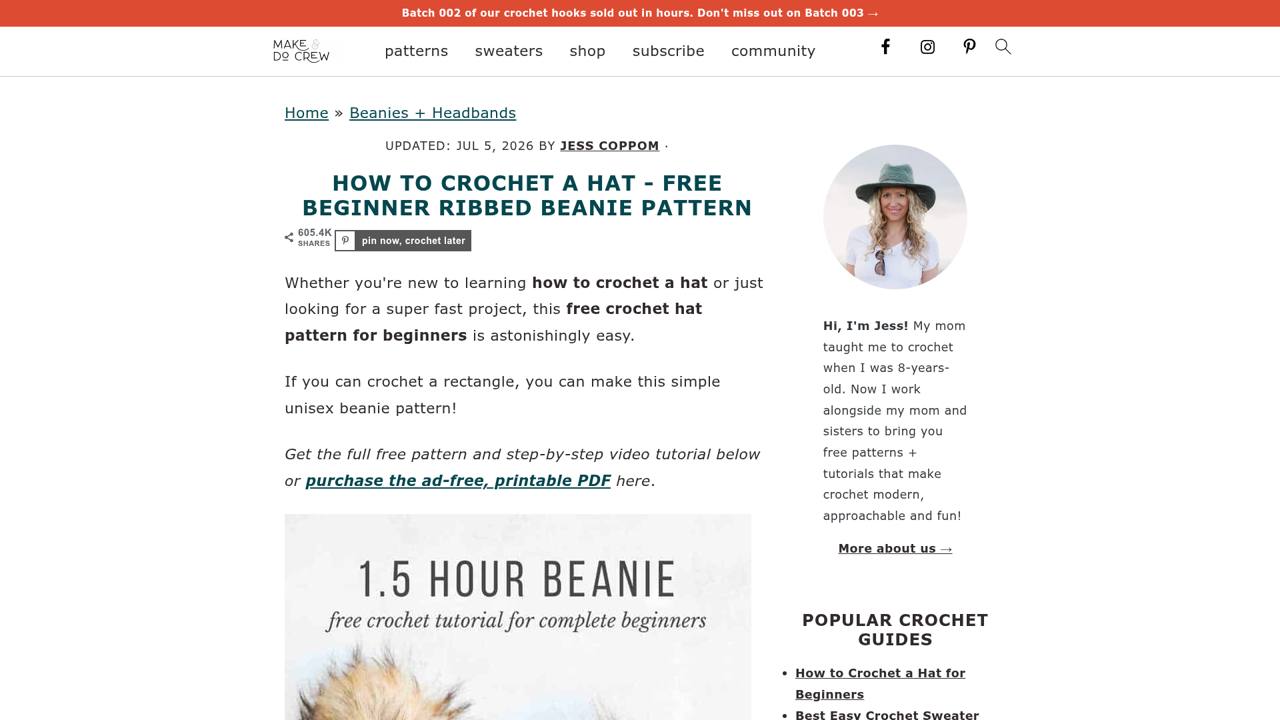
This Make and Do Crew design starts with a crocheted rectangle instead of a growing circular crown. Joining the rectangle and gathering its upper edge transforms the fabric into a classic ribbed beanie.
The free page includes measurement guidance, a size chart, and a video tutorial, helping beginners understand each construction stage. Its bulky yarn produces a substantial winter accessory. The designer specifically mentions selling finished hats at craft markets or donating them, making the page useful for makers planning more than one personal project.
- Type
- Rectangle beanie
- Best for
- Avoiding crown increases
- License
- Free pattern; finished hats explicitly suggested for sales or donations
- Price
- Free online
Sewrella Parker Crochet Baby Hat
Beginner baby and child hat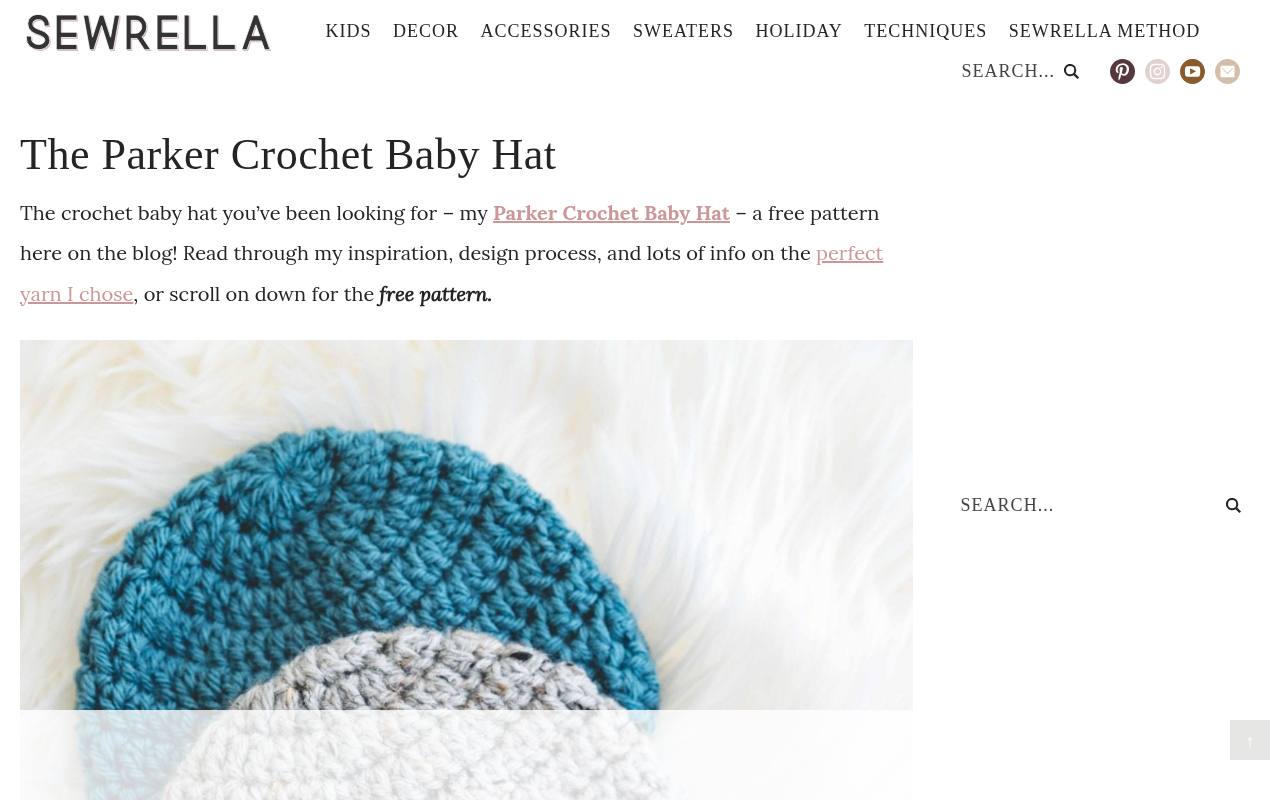
Sewrella’s Parker Crochet Baby Hat expands an original newborn design into sizes for babies, preschoolers, and children. Ashleigh introduces it as a beginner-friendly project, pairing simple stitches with written directions and a full video tutorial.
The sample yarn is Lion Brand Vanna’s Choice, a worsted-weight option, rather than the chunky yarn used in many quick beanies. The free blog pattern also links to coordinating booties and a diaper cover if you want a matching gift set. Check the size directions rather than assuming the original newborn proportions apply throughout.
- Type
- Beginner baby and child hat
- Best for
- Making a simple hat with video guidance
- License
- Free pattern; redistribution rights not granted
- Price
- Free online
Persia Lou Chunky Ribbed Slouch Hat
Bulky slouch hat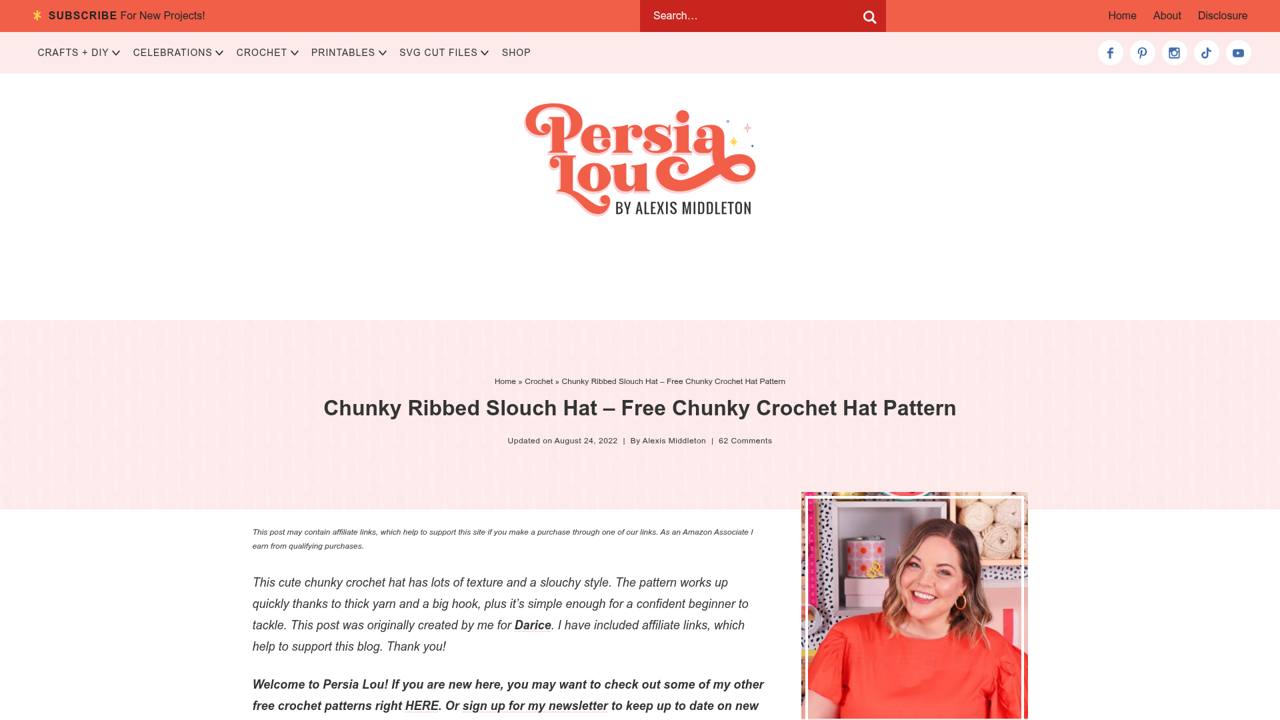
Alexis Middleton combines category five yarn with a ten-millimeter hook for this chunky ribbed slouch hat. The project begins as a rectangle and is described as suitable for a confident beginner. A pompom maker appears in the supply list as an optional finishing tool, rather than a requirement for completing the hat.
The free instructions use American crochet terms. This page permits selling finished items, requests a link when possible, and prohibits selling or redistributing the written pattern, clearly distinguishing handmade products from the instructions.
- Type
- Bulky slouch hat
- Best for
- Quick textured accessories
- License
- Finished-item sales allowed; link requested when possible; no pattern redistribution
- Price
- Free online
Persia Lou Slouchy Shell Crochet Hat
Shell-stitch beanie
A ribbed brim and shell-stitch body give this Persia Lou hat a more decorative surface than a plain winter cap. It is worked from the bottom upward, with intermediate crocheters identified as the intended audience.
Two colors of worsted yarn, a five-and-a-half-millimeter hook, and a large pompom maker appear in the materials. The free page includes gauge and special-stitch explanations. Its personal-use-only restriction is important: do not transfer commercial permissions from another Persia Lou design to this one simply because both patterns are free.
- Type
- Shell-stitch beanie
- Best for
- Intermediate bottom-up texture
- License
- Free for personal use only
- Price
- Free online
Persia Lou Black Cat Slouch Hat
Cat-ear hat
The Black Cat Slouch Hat pairs chunky ribbing with pointed cat ears for a playful accessory that does not require making a separate stuffed character. Persia Lou notes that the original metallic-flecked yarn is discontinued and was relatively light within the super-bulky category.
A much thicker substitute can therefore change the result significantly. The pattern is published freely in the blog post. Finished-item sales are permitted, with a link requested where possible, but the author prohibits pattern redistribution and using her photographs to advertise your work.
- Type
- Cat-ear hat
- Best for
- Playful chunky headwear
- License
- Finished-item sales allowed; no redistribution or designer-photo use
- Price
- Free online
Crochet Dreamz Beginner Textured Family Hat
Textured family beanie
Crochet Dreamz provides a textured family beanie in sizes from baby through adult large, with finished height and intended head measurements listed for each. The sample uses super-bulky Cozy Wool, and the author warns that this yarn has more drape than some other yarns in its category.
Separate hook sizes are used for the ribbing and body. The free written pattern is available on the page, while an ad-free PDF costs extra. Yardage estimates also distinguish the smaller hats from child and adult versions.
- Type
- Textured family beanie
- Best for
- Baby through adult sizing
- License
- Free online pattern; verify finished-item selling permission separately
- Price
- Free online
All About Ami Cabled Slouchy Beanie
Cabled beanie
Stephanie Lau documents the Cabled Slouchy Beanie with a detailed photo walkthrough, making the construction visible rather than offering only a finished photograph. The sample uses worsted-weight Heartland yarn and a five-millimeter hook. A back-loop single-crochet band establishes the ribbed edge before the textured body begins.
The post discusses measuring the band against your own head because the fabric stretches. Free online instructions are accompanied by an optional paid PDF collection that includes related beanie designs and the illustrated tutorial for offline use.
- Type
- Cabled beanie
- Best for
- Learning raised cable work
- License
- Free online pattern; verify finished-item selling permission separately
- Price
- Free online
Whistle and Ivy Crochet Plaid Slouchy Hat
Plaid beanie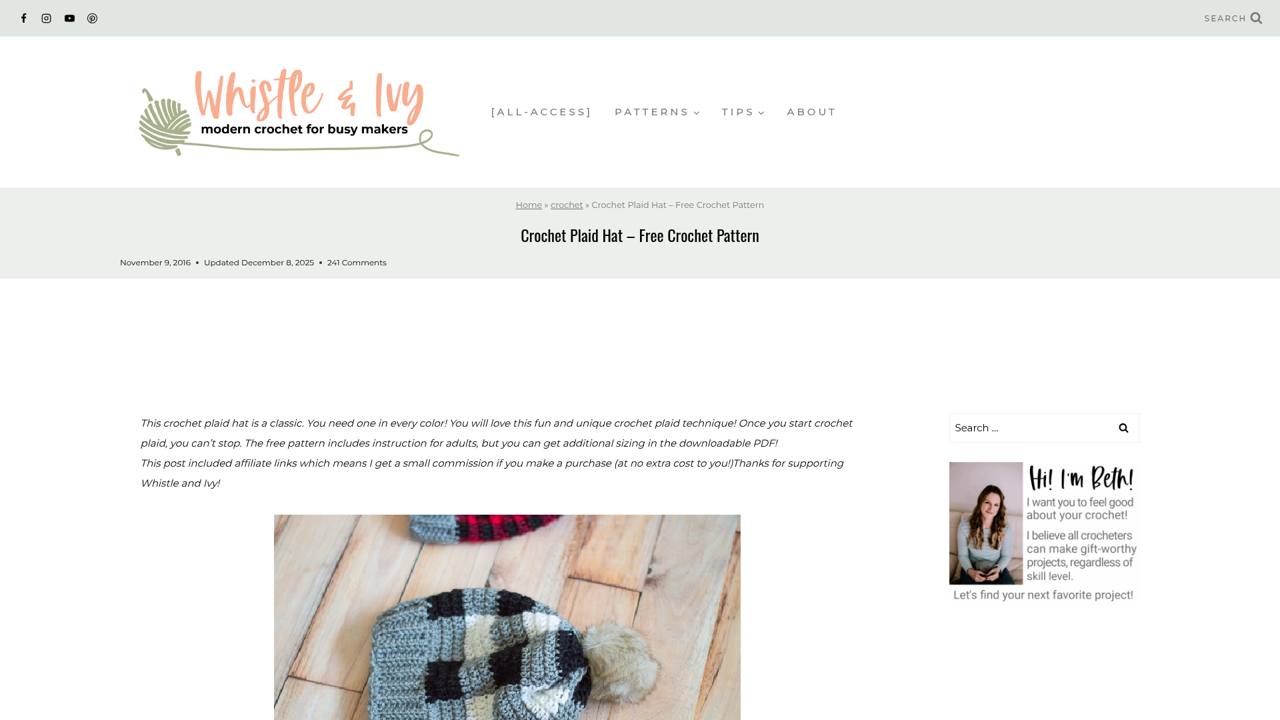
Whistle and Ivy builds the buffalo-plaid effect mainly with double crochet stitches and repeated color changes. The free page contains adult instructions; additional sizing is offered in the downloadable PDF rather than in the free version. A pompom tops the sample, but the checked fabric provides the principal visual interest.
This is a useful progression when basic stitches feel familiar and you want to concentrate on color management. Making and selling hats is allowed, while distributing the pattern or using the designer’s photos in listings is prohibited.
- Type
- Plaid beanie
- Best for
- Deliberate color-change practice
- License
- Finished-item sales allowed; no pattern redistribution or photo reuse
- Price
- Free online
Repeat Crafter Me Polar Bear Earflap Hat
Animal earflap hat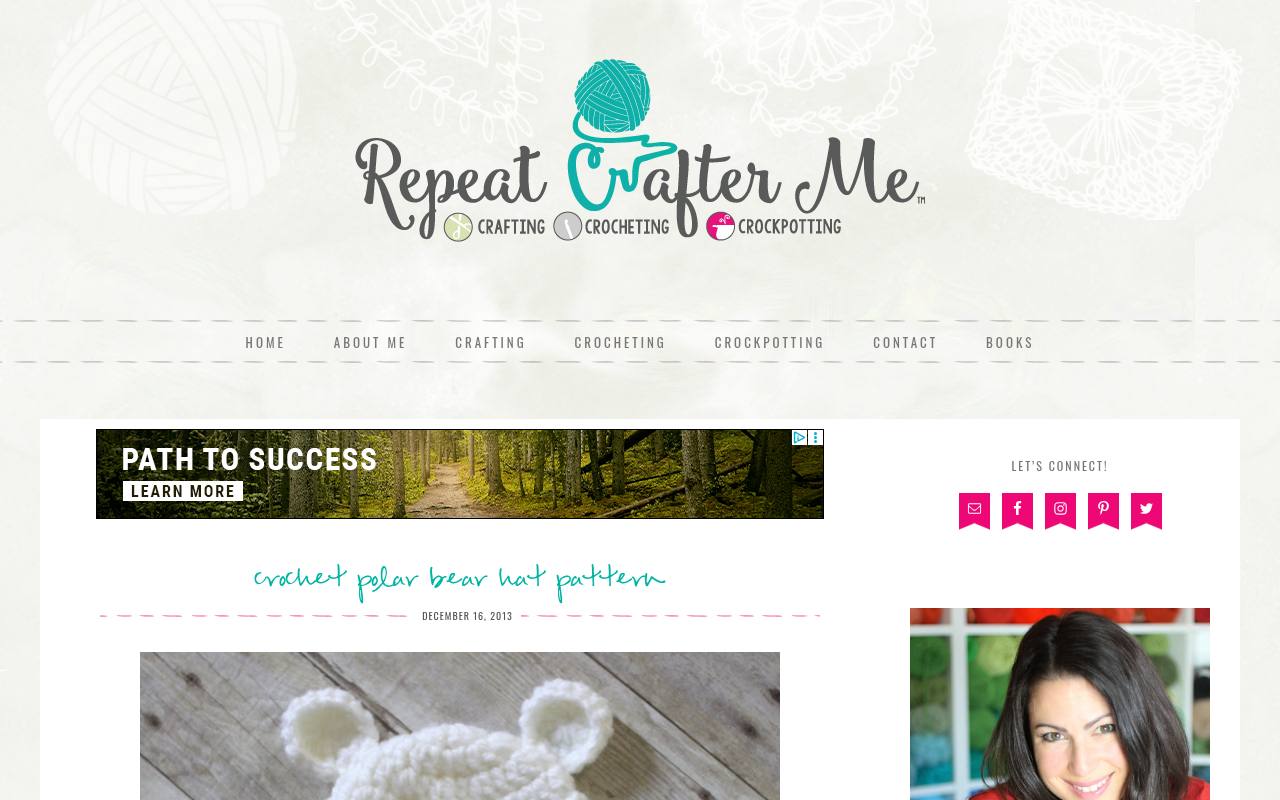
Sarah Zimmerman combines a double-crochet crown and earflaps with rounded ears and a separate muzzle in this Polar Bear Hat. The materials include bulky white Charisma yarn, black yarn, stuffing for the nose, and small buttons for eyes.
Several baby sizes receive their own round instructions directly on the free page. Positioning the facial pieces adds finishing work beyond a basic beanie. For young recipients, consider embroidered features instead of detachable buttons, and inspect every attachment carefully before giving the completed hat to a family.
- Type
- Animal earflap hat
- Best for
- Ear coverage and bear details
- License
- Free online pattern; verify finished-item selling permission separately
- Price
- Free online
Measure the actual head
Start with head circumference, measured level around the widest part of the head above the eyebrows and ears. Compare it with the pattern’s intended fit rather than choosing only by age.
Stretchy beanies often need negative ease, meaning the finished hat is smaller than the head. A cotton bucket hat should not automatically receive the same adjustment. If the recipient is unavailable, measure a hat that already fits well and note whether it stretches during wear.
Check gauge in the right fabric
Work a gauge sample in the stated stitch pattern using your intended yarn. Wash and dry it as you expect to care for the hat, then measure away from the edges.
Row gauge matters for height as well as stitch gauge for circumference. On a circular design, use any crown-diameter checkpoints the author provides. Rechecking early is faster than discovering at the brim that your stitches have produced an entirely different size.
Fit the brim before adding height
A ribbed brim should stretch comfortably over the head and recover after you release it. Try a separately worked band before committing to the full body. Additional body height creates slouch, whereas extra width may simply make the hat slip downward.
Check that the finished brim will cover the ears if warmth is the goal. For bucket hats, follow the specified increases initially; changing their frequency alters the flare rather than merely making a longer edge.
Substitute yarn thoughtfully
Compare fiber, yardage, and drape, not just the weight category printed on a label. Two super-bulky yarns can behave very differently, particularly when one is a soft wool blend and another is dense chenille.
Wool blends may offer spring and warmth, while cotton suits many structured summer hats. Feel the finished sample against your forehead to judge comfort. For children’s gifts, include clear washing information and avoid selecting a delicate yarn that requires care the family cannot realistically provide.
Finish decorations securely
A removable pompom can make washing easier, but its fastening must suit the wearer and remain secure. Heavy toppers may pull a slouchy crown backward, so test the balance before completing the attachment.
Avoid loose beads, buttons, or detachable trim on baby hats. Embroider facial features when appropriate and inspect sewn-on ears. Long earflap cords also require caution around young children; decorative appearance does not outweigh the need to assess entanglement and choking hazards before gifting.
Choose a crown method that suits you
Most free hat patterns start in one of two ways. A top-down crown begins with a small ring and increases in rounds until the flat circle matches a target diameter, which lets you try the hat on as you go and stop exactly where it fits.
A bottom-up or rectangle hat starts with the brim, often worked sideways in rows of back-loop stitches, and is gathered or seamed closed at the top. This method suits beginners because the whole hat is one flat piece with only one seam to sew.
If you are new to working in rounds, use a stitch marker in the first stitch of every round. It keeps the stitch count honest, prevents a slanted seam line, and makes it easy to count increases on the crown.
Plan sizes for the whole family
Many free patterns list baby, child, teen and adult sizes in one table, so a single download can cover gifts for a whole household. Highlight your size in the pattern before you start so the right numbers are easy to follow.
For quick holiday or charity batches, pick a pattern with a simple stitch repeat and a bulky yarn. Shelters and hospitals often publish their own size and fiber guidelines for donated hats, so check them before choosing materials.
Prepare finished hats for selling
Check finished-item permissions on the exact pattern you intend to use, because policies can differ within one designer’s collection. This selection includes explicit sales allowances and a personal-use-only pattern. Use your own photographs and describe actual measurements instead of promising that an age label fits every recipient.
Record yarn quantities, finishing time, and attachment costs when calculating prices. Keep the designer’s instructions private and recommend the original link rather than distributing a copied pattern with your products.