
A good crochet stitch guide does more than show an attractive square of fabric. It helps you understand where the hook goes, how the repeat fits together, and what changes when you work another row. These resources concentrate on learning stitches rather than collecting finished-project patterns.
Different explanations solve different problems. Close-up photographs let you inspect a difficult insertion point, while video reveals the motion that a still image misses. Symbol references provide another route into the same instructions, especially when a written repeat feels much longer than the fabric looks.
The selections below include free online libraries, technique archives, and dedicated chart references. Some publishers also sell books, printable files, or memberships; those extras are separate from the linked free material. Bookmark the original pages so that you can return to the designer’s explanations without relying on detached screenshots.
Quick picks at a glance
| # | Resource | License | Best for |
|---|---|---|---|
| 1 | New Stitch A Day Crochet Stitchionary | Free to read; tutorial text and images remain copyrighted | Choosing a family of stitches |
| 2 | Rich Textures Crochet Stitch Archive | Free to read; tutorial text and images remain copyrighted | Exploring textured stitch variations |
| 3 | The Unraveled Mitten Stitch Tutorials | Free to read; tutorial text and images remain copyrighted | Finding regular and Tunisian textures |
| 4 | Stitching Together Crochet Tutorials | Free to read; tutorial text and images remain copyrighted | Understanding foundations and familiar textures |
| 5 | Nordic Hook Crochet Stitch Library | Free to read; tutorial text and images remain copyrighted | Comparing fabric properties |
| 6 | Daisy Farm Crafts Free Stitch Tutorials | Free to read; tutorial text and images remain copyrighted | Learning loop placement variations |
| 7 | Craft Yarn Council Crochet Chart Symbols | Free to read; tutorial text and images remain copyrighted | Decoding standardized chart marks |
| 8 | Craft Yarn Council Crochet Abbreviations Master List | Free to read; tutorial text and images remain copyrighted | Translating compact written instructions |
| 9 | MyPicot Crochet Chart Guide | Free to read; tutorial text and images remain copyrighted | Connecting symbols to actual rows |
| 10 | MyPicot Crochet Symbols and Terms | Free to read; tutorial text and images remain copyrighted | Matching chart labels with hook movements |
New Stitch A Day Crochet Stitchionary
Categorized stitch directory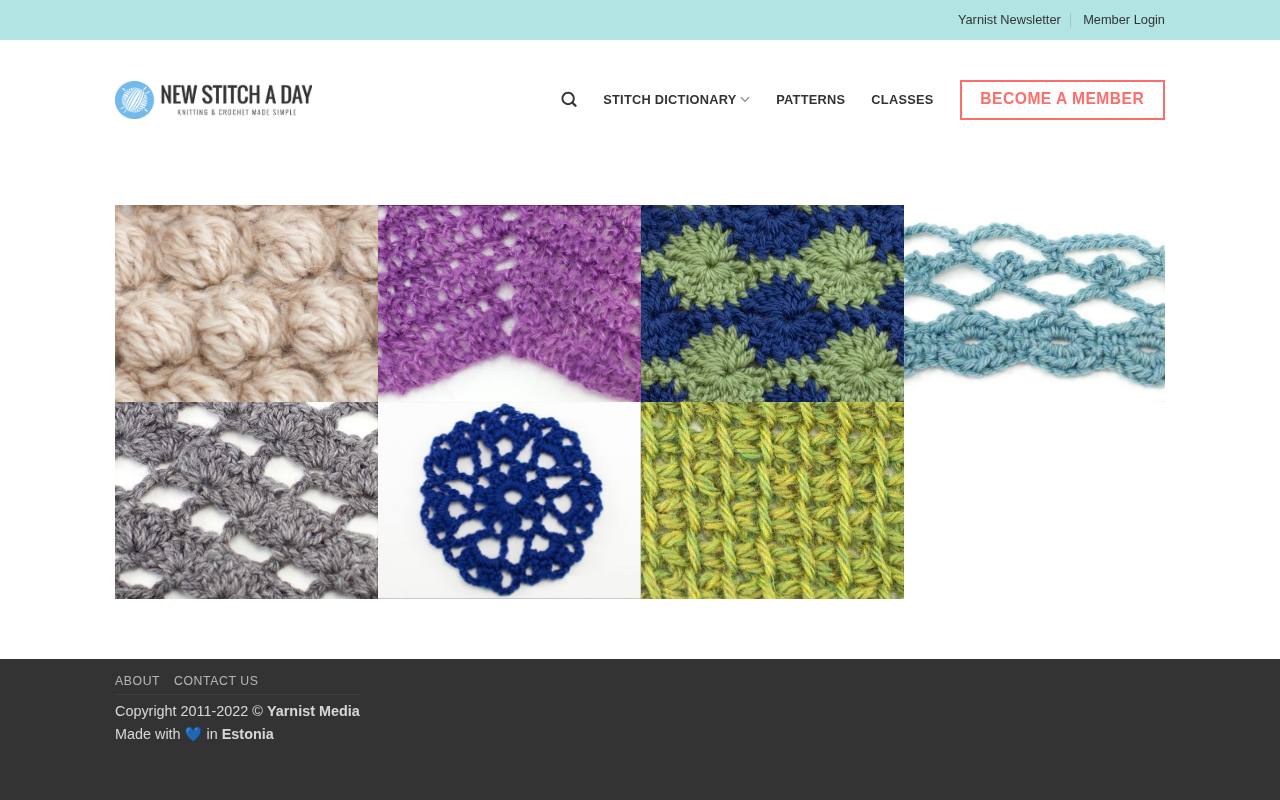
New Stitch A Day organizes its crochet stitchionary around stitch families, including bobbles and puffs, chevrons and ripples, colorwork, edgings, lace and shells, and Tunisian crochet. That structure is helpful when you know the effect you want but not its name.
The directory leads into individual lessons rather than presenting a single downloadable dictionary. Its video-oriented teaching makes it a useful starting point for exploring unfamiliar textures. Browse a category first, then choose one repeat to sample instead of trying to learn several similar stitches at once.
- Type
- Categorized stitch directory
- Best for
- Choosing a family of stitches
- License
- Free to read; tutorial text and images remain copyrighted
- Price
- Free
Rich Textures Crochet Stitch Archive
Stitch tutorial archive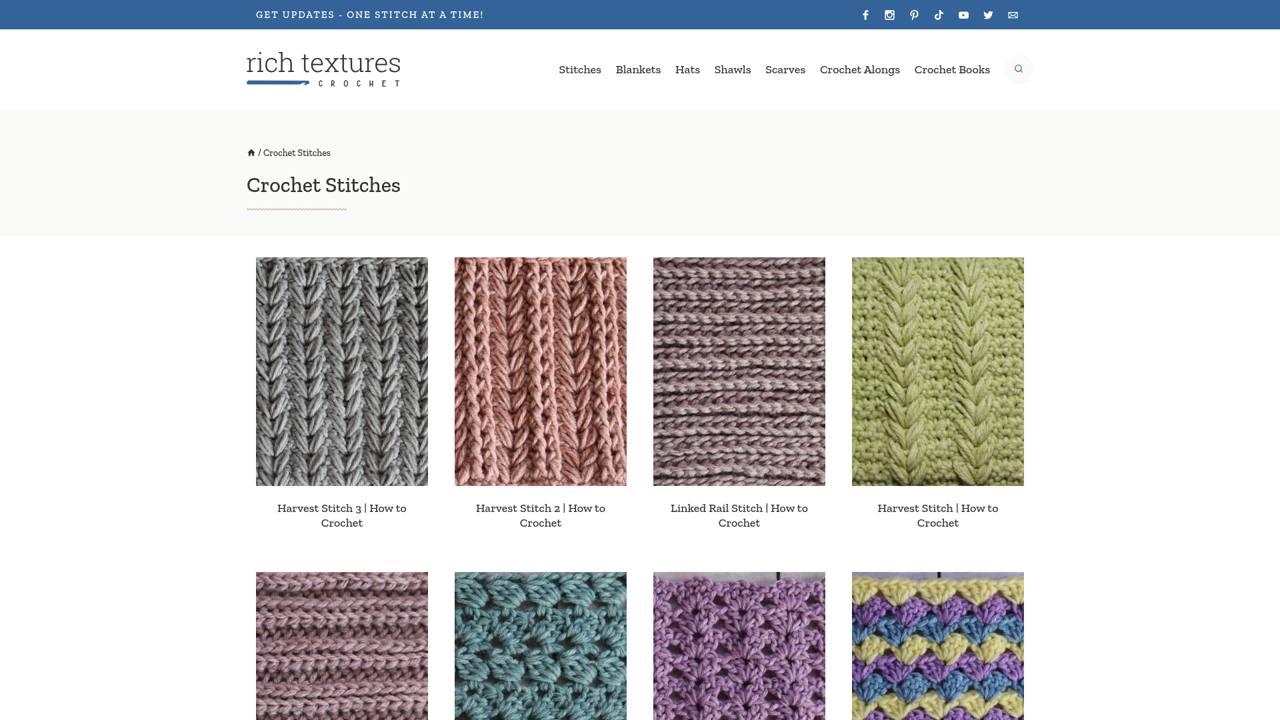
Sarah’s Rich Textures Crochet archive gathers individual stitch lessons with descriptive titles that make comparisons easier. The index includes linked rail stitch, connected spiral stitch, iris stitch, and separate stepping stone tutorials for rows and rounds.
Those last two entries are particularly useful reminders that a stitch’s construction can change with the direction of work. This is a browsable online archive, not a promise of one consolidated free PDF. Start with the named lesson that matches your working method, then use the broader archive to discover related surfaces and repeats.
- Type
- Stitch tutorial archive
- Best for
- Exploring textured stitch variations
- License
- Free to read; tutorial text and images remain copyrighted
- Price
- Free
The Unraveled Mitten Stitch Tutorials
Crochet technique index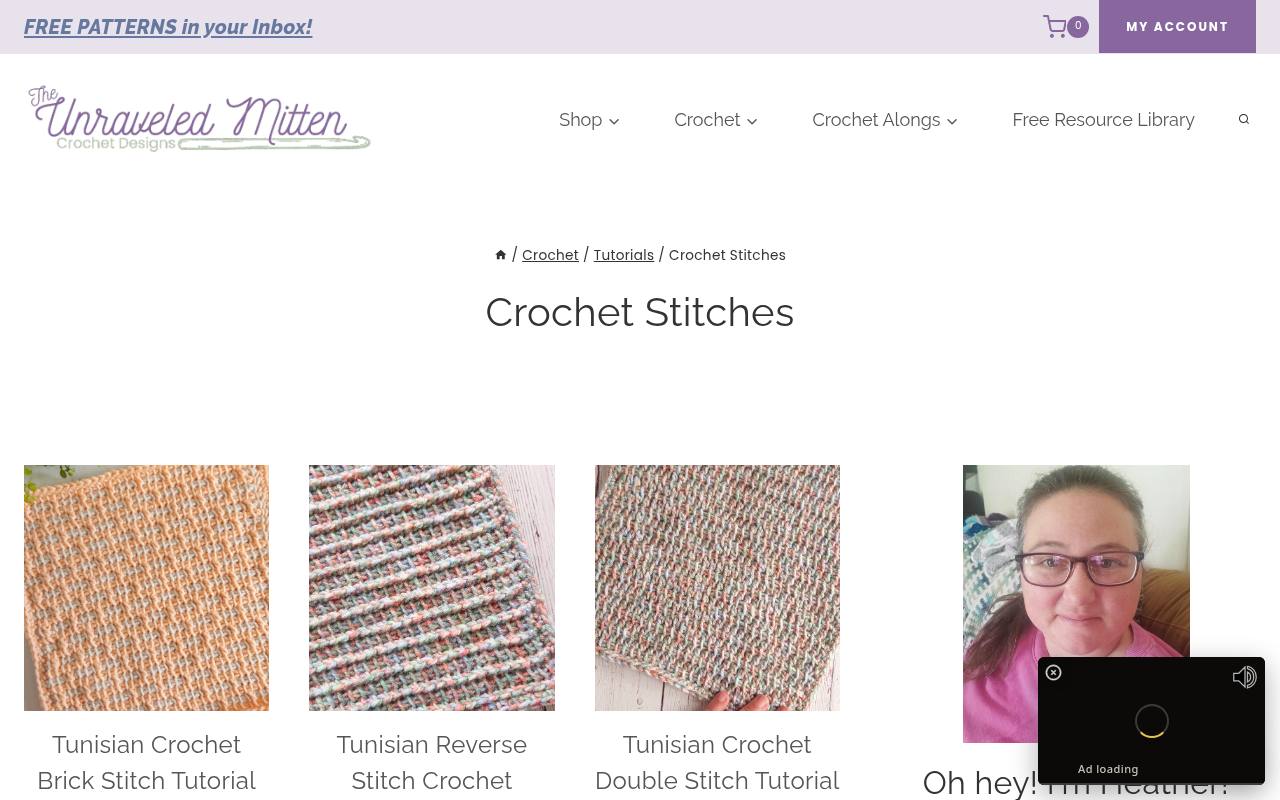
Heather’s stitch archive brings together traditional and Tunisian crochet lessons in one place. The listed topics include raised brick, even bobble, aligned cobble, braided cable, and diamond trellis, alongside Tunisian reverse and double stitch tutorials. It is especially useful for comparing descriptive stitch names before committing to a technique.
Some entries are framed around a square, but the resource’s value here is the stitch instruction, not a collection of blanket patterns. Follow the individual tutorial for its setup and repeat rather than assuming every texture uses the same foundation.
- Type
- Crochet technique index
- Best for
- Finding regular and Tunisian textures
- License
- Free to read; tutorial text and images remain copyrighted
- Price
- Free
Stitching Together Crochet Tutorials
Photo tutorial directory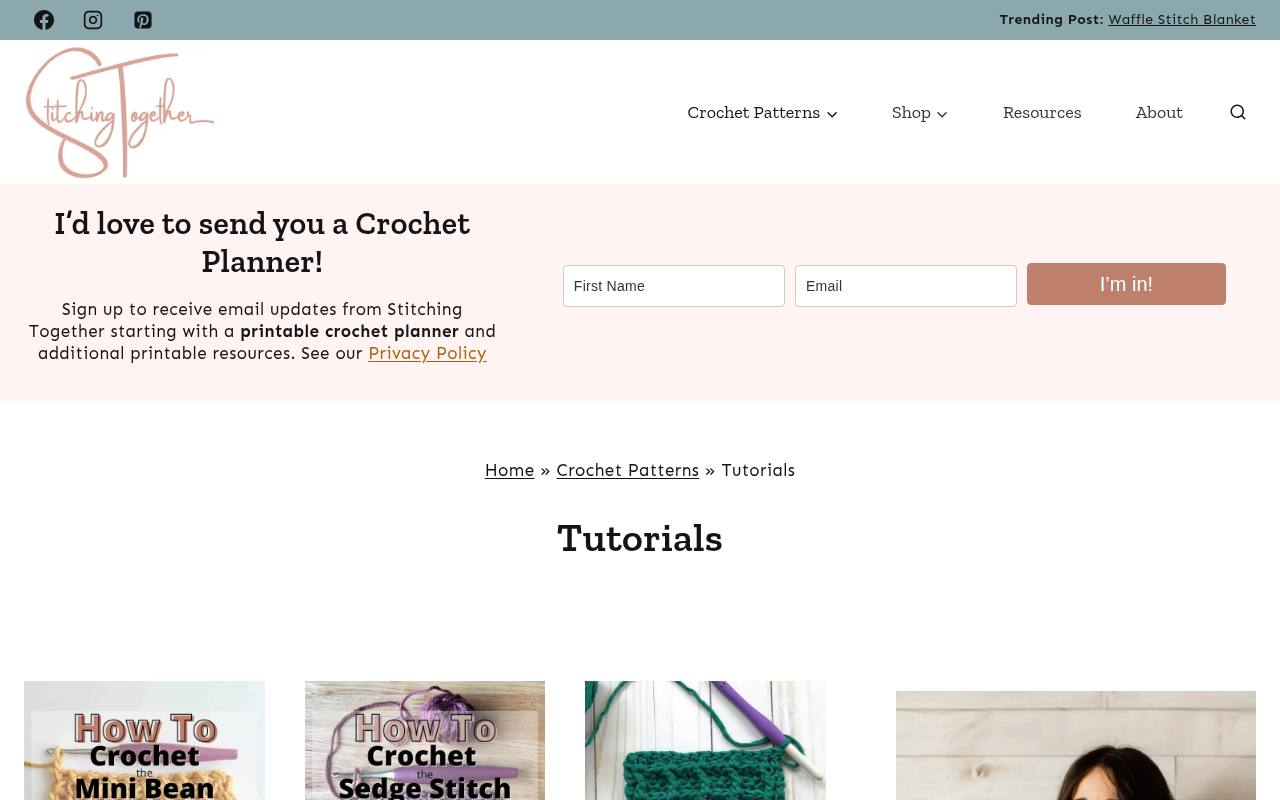
Stitching Together’s tutorial category combines recognizable fabric stitches with foundation techniques that improve the start of a project. Its entries include sedge, waffle, lemon peel, alpine, suzette, and bean stitch lessons.
You will also find foundation single crochet and extended single crochet, plus a foundation half double crochet lesson explicitly offered for left- and right-handed makers. That handedness-specific option is a useful distinction when a demonstration feels reversed. Use the category as a menu, then read the actual lesson before choosing your starting chain or foundation method.
- Type
- Photo tutorial directory
- Best for
- Understanding foundations and familiar textures
- License
- Free to read; tutorial text and images remain copyrighted
- Price
- Free
Nordic Hook Crochet Stitch Library
Photo stitch library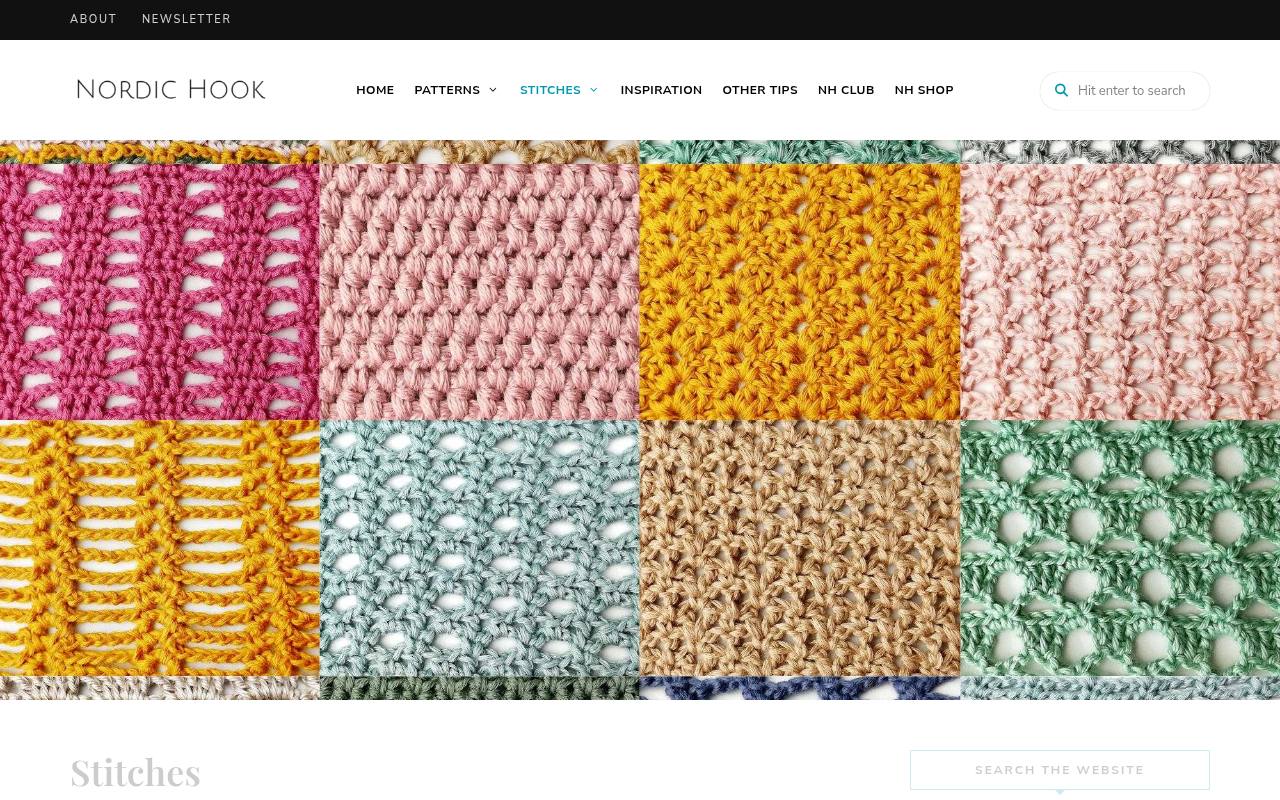
Nordic Hook groups its step-by-step photo tutorials into lacy, solid, multicolor, textured, and reversible categories. These are practical filters when you care about openness or the appearance of both fabric faces, not just a pretty stitch name.
The free website material is distinct from the publisher’s paid ebooks and Nordic Hook Club. In particular, member-exclusive charts belong to the club offering; they should not be mistaken for a free feature of every tutorial. Browse the photographs online first, then decide whether a printable version would genuinely improve your workflow.
- Type
- Photo stitch library
- Best for
- Comparing fabric properties
- License
- Free to read; tutorial text and images remain copyrighted
- Price
- Free online; optional paid ebooks and membership
Daisy Farm Crafts Free Stitch Tutorials
Video-linked stitch list
Daisy Farm Crafts presents a single browsing list that starts with basic stitches and moves through variations and combinations. Each linked stitch tutorial has an accompanying short video demonstration. The list distinguishes front-loop, back-loop, extended, and wide versions, making it useful for understanding how small changes affect fabric.
Rather than buying the separately promoted stitch book, you can use the free online lessons directly. Try two versions of the same basic stitch in identical yarn to see why the precise loop or space specified in a pattern matters.
- Type
- Video-linked stitch list
- Best for
- Learning loop placement variations
- License
- Free to read; tutorial text and images remain copyrighted
- Price
- Free online; optional paid book
Craft Yarn Council Crochet Chart Symbols
Symbol reference and PDF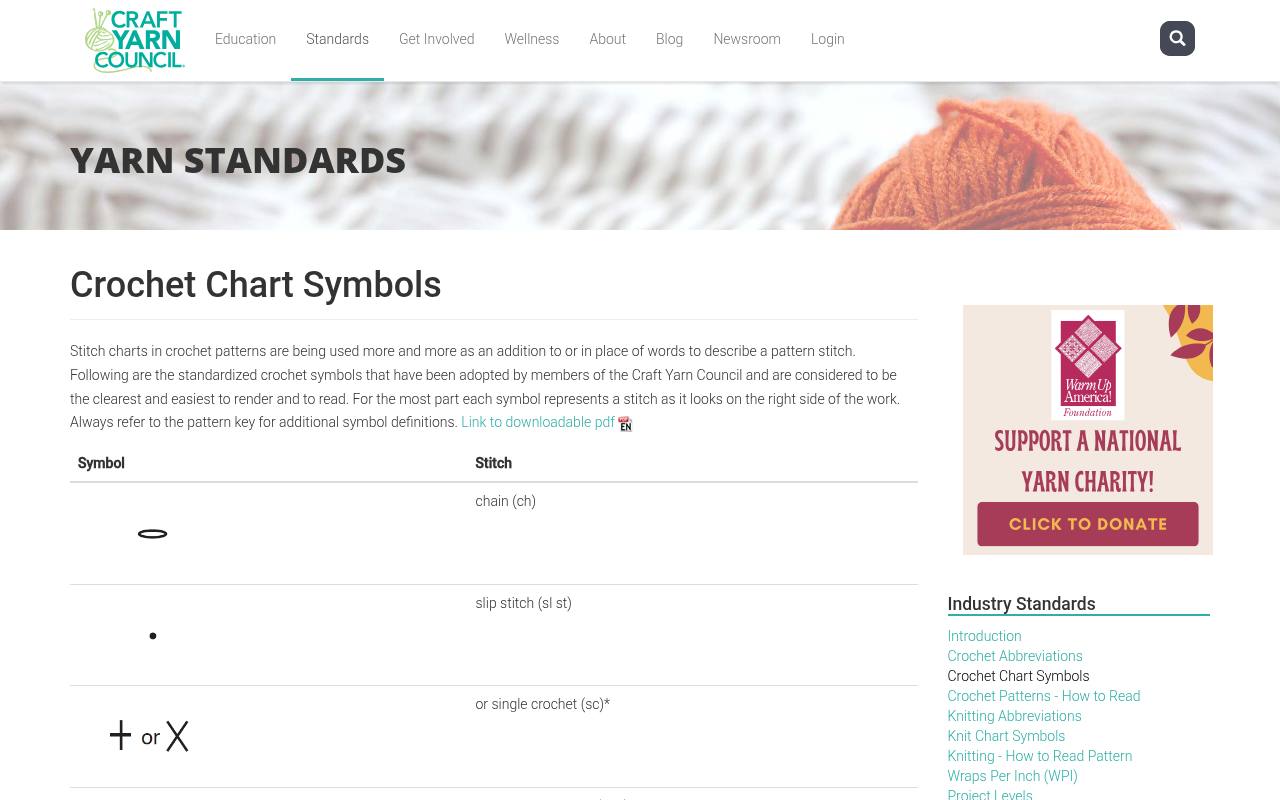
The Craft Yarn Council publishes a standardized symbol key covering chains, slip stitches, basic stitch heights, decreases, clusters, popcorns, shells, picots, and post stitches. It also shows marks for front-loop-only and back-loop-only work. A linked downloadable PDF makes this a useful desk reference beside a charted pattern.
The council explains that symbols generally represent stitches as viewed from the right side. It also warns readers to consult the individual pattern key for additional definitions, so this reference supports a designer’s legend rather than replacing it.
- Type
- Symbol reference and PDF
- Best for
- Decoding standardized chart marks
- License
- Free to read; tutorial text and images remain copyrighted
- Price
- Free
Craft Yarn Council Crochet Abbreviations Master List
Written terminology reference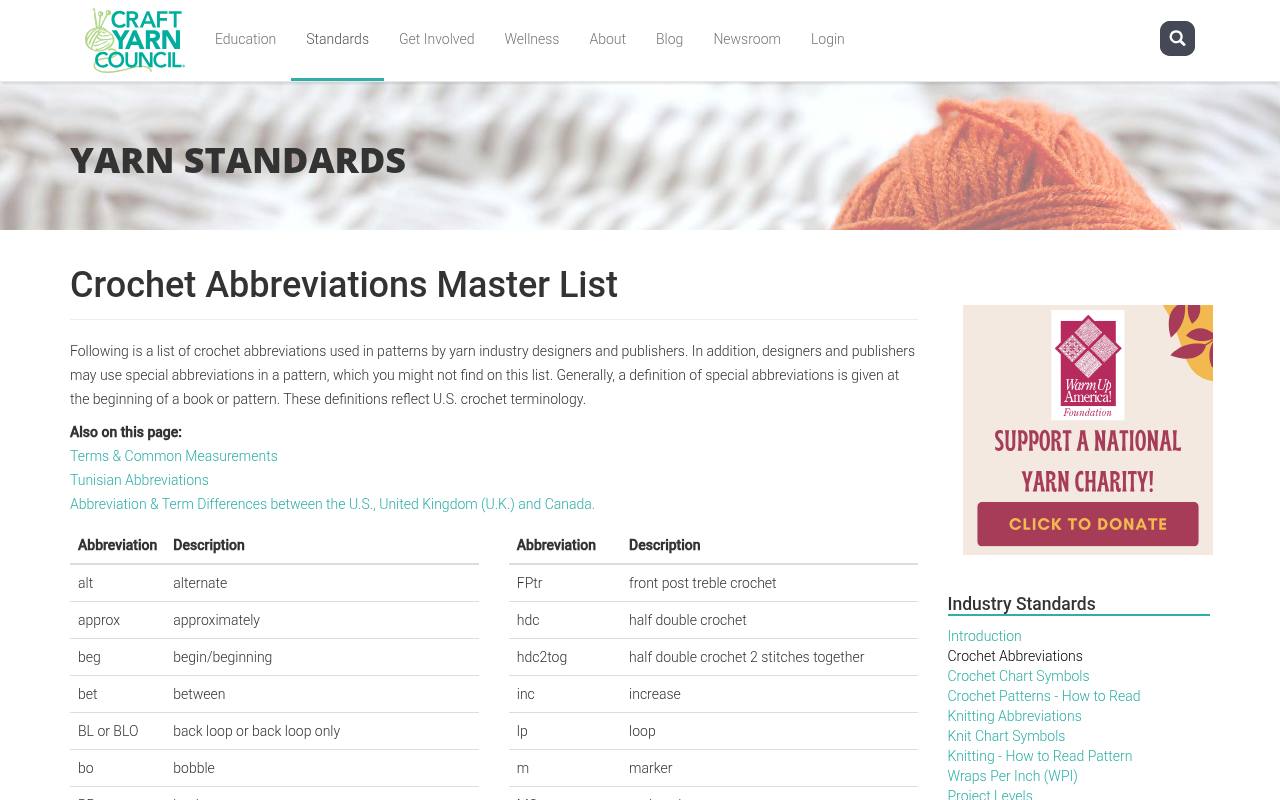
This master list decodes US crochet abbreviations used by yarn-industry designers and publishers. Alongside familiar stitch names, it explains directional and organizational shorthand such as alternate, beginning, contrasting color, back loop, and chain space. That broader coverage helps when you can make the stitches but cannot yet follow a compressed instruction.
The council notes that designers may introduce special abbreviations outside the list, usually defined within the pattern. Keep this reference beside written tutorials, but let the tutorial’s own definitions settle any stitch-specific meaning or unusual construction.
- Type
- Written terminology reference
- Best for
- Translating compact written instructions
- License
- Free to read; tutorial text and images remain copyrighted
- Price
- Free
MyPicot Crochet Chart Guide
Worked chart-reading lesson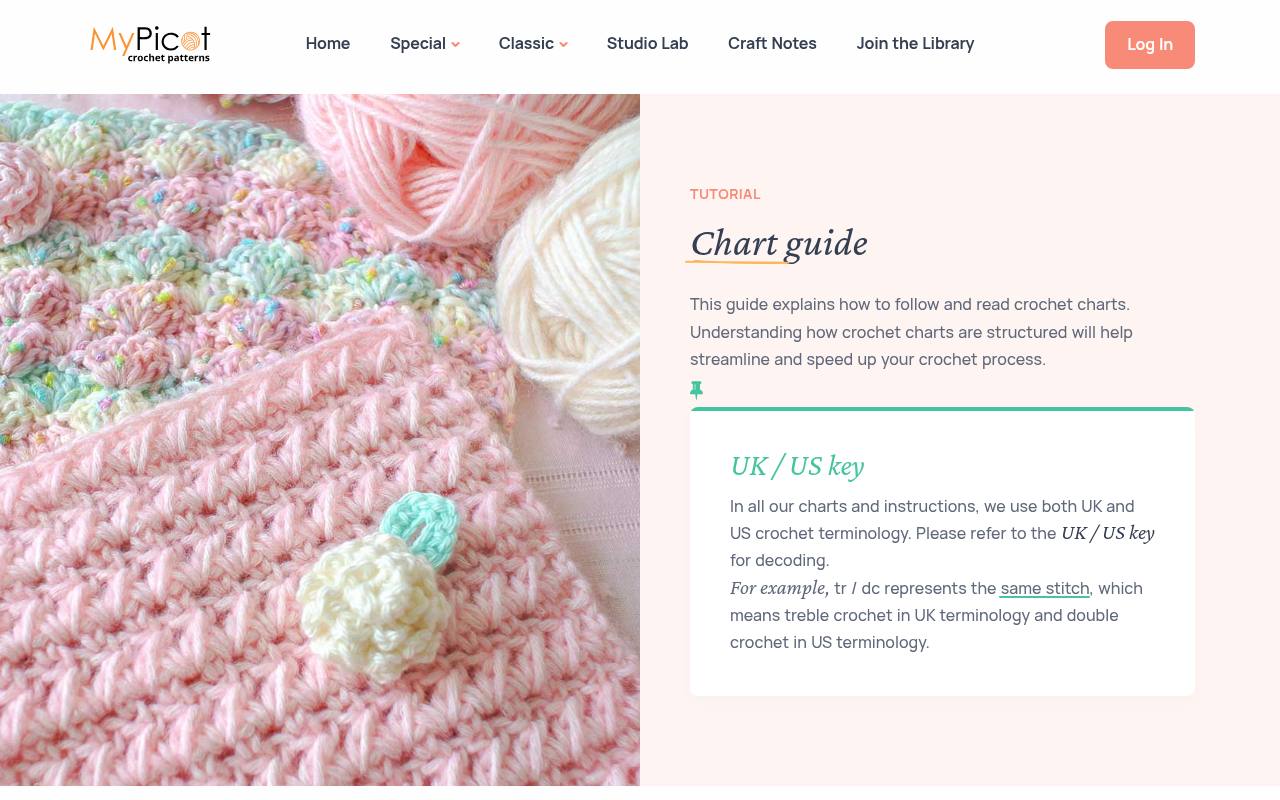
MyPicot’s free chart-reading walkthrough uses its Narrow prospect lace example to connect a diagram with written instructions. The lesson begins with fourteen chains and explains where the first shells sit, then follows the next row into the chain spaces below. This makes it more concrete than a symbol table alone.
Its UK and US pairing also explains that tr/dc names the same physical stitch in two terminology systems. Although the wider MyPicot library mixes free and premium designs, this linked guide supplies an accessible lesson without requiring you to purchase the library.
- Type
- Worked chart-reading lesson
- Best for
- Connecting symbols to actual rows
- License
- Free to read; tutorial text and images remain copyrighted
- Price
- Free
MyPicot Crochet Symbols and Terms
Stitch symbols and technique reference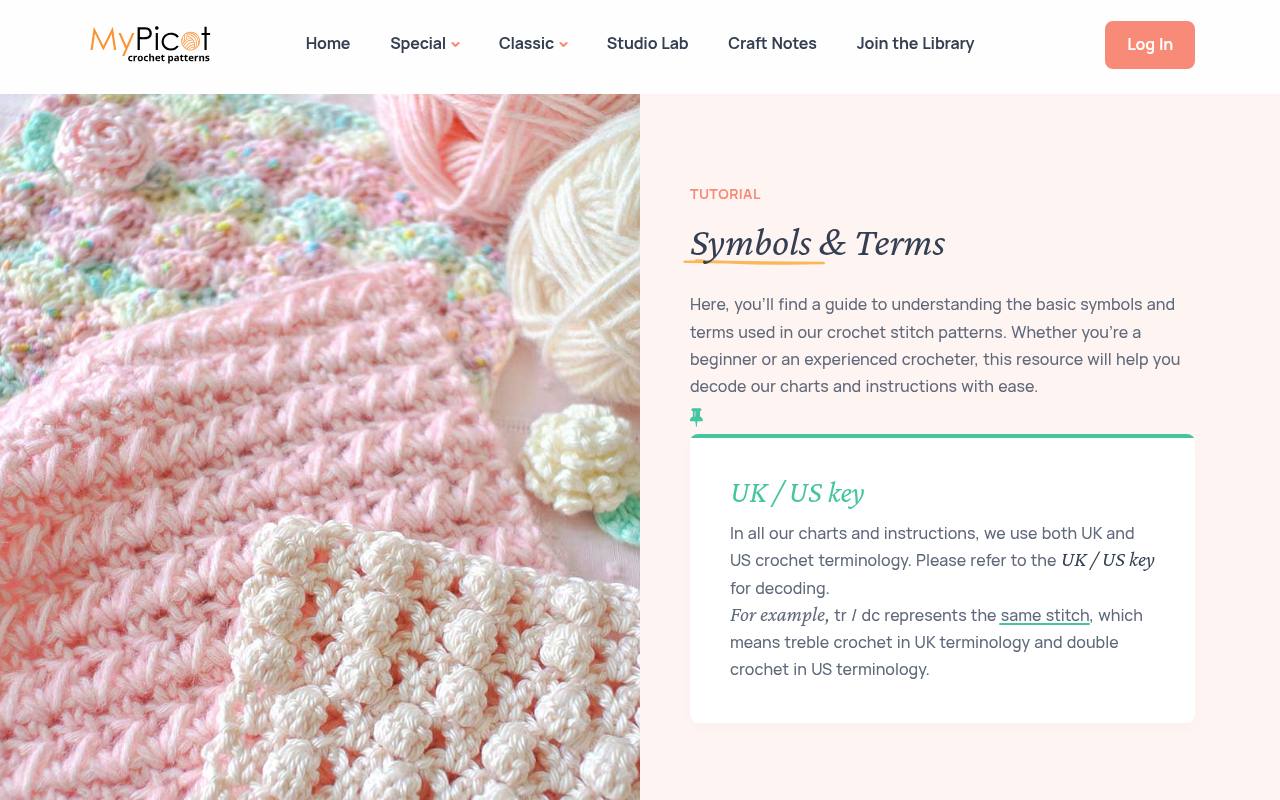
MyPicot’s Symbols & Terms page introduces basic stitch symbols together with written technique steps. It is intended to support the site’s charts, while special stitches are explained within their own pattern instructions. The page also establishes its paired UK/US notation, including the tr/dc example, so readers do not accidentally work a taller stitch than intended.
Use it alongside the separate chart guide when the diagram is readable but the stitch itself is unfamiliar. This is a reference page rather than a guarantee that every pattern in the surrounding library is free.
- Type
- Stitch symbols and technique reference
- Best for
- Matching chart labels with hook movements
- License
- Free to read; tutorial text and images remain copyrighted
- Price
- Free
Choose US or UK terminology before you begin
Write US terms or UK terms at the top of your notes before making the first chain. A US single crochet is a UK double crochet, while a US double crochet is a UK treble. The identical abbreviation dc therefore describes different movements in the two systems.
Look for an explicit terminology statement rather than guessing from the writer’s location. When a guide prints paired names, establish which side of the pair you are following and stay with it throughout the swatch. This prevents a consistent but incorrect substitution that can still look deceptively neat.
Read a chart as a map of stitch placement
Begin with the chart legend, row numbers, and any arrows indicating direction. Flat work commonly alternates reading direction between rows; rounds follow the orientation indicated by the designer. Trace a small section with your finger before crocheting it.
Notice whether several symbols share one base, whether they join at the top, and whether the hook enters a stitch or a chain space. Those relationships reveal increases, decreases, and grouped stitches more clearly than memorizing isolated symbols. Do not assume a familiar-looking mark has the same meaning in every publisher’s diagram.
Adjust tension for the fabric you actually want
A recommended hook is a starting point, not a guarantee of comfortable tension. Dense post stitches and bulky clusters can feel stiff in a hook size that works beautifully for plain double crochet. Make enough rows for the fabric to settle, then test flexibility, coverage, and stitch definition.
If the foundation edge draws inward while later rows spread naturally, try a larger hook for the starting chain. Change one variable at a time and record it. Otherwise, you may not know whether a better result came from the hook, yarn, or a looser grip.
Treat turning chains as part of the instructions
Check whether the turning chain counts as a stitch in the specific lesson. If it counts, the first actual stitch may belong in the next position, and the final stitch may need to enter the top of the previous turning chain. If it does not count, the edge behaves differently.
Mark the first and last counted stitches for several rows until the routine feels secure. A widening or narrowing swatch often signals an edge-counting problem rather than a faulty repeat. Avoid replacing the stated chain height until you understand the original construction.
Build a useful notebook of practice swatches
Choose practice swatches wide enough to contain several complete repeats and tall enough to show the established texture. Label each one with the source, terminology, yarn, hook, foundation multiple, and row repeat. Wash or block it according to the yarn’s care instructions before judging its final dimensions.
Photograph both faces when reversibility matters. Include a short observation about drape, gaps, or difficult insertion points rather than recording only measurements. Over time, these small tests become a personal stitch dictionary grounded in your own hands, not just the appearance of a publisher’s sample.
Keep unsuccessful samples too, with a note explaining what failed. A curled edge, overly tight foundation, or muddy color combination can teach you what to change on the next attempt.