
Good free quilt pattern sites offer more than an attractive photograph. They give you a dependable route to cutting instructions, fabric requirements, and assembly diagrams. These libraries include fabric manufacturers, a specialist retailer, and tutorial publishers.
Some lead directly to printable PDFs. Others combine downloadable projects with instructions read online. Choose a source whose format fits the way you sew, rather than collecting files you will never open.
A free pattern is not a free fabric kit. Product photographs often feature a particular collection, and shopping links can sit beside the download button. Separate the instructions from the materials before comparing costs.
Older collections may be unavailable, but a clear cutting list lets you substitute fabrics with similar contrast. Check whether a panel, border print, or unusually large motif is essential before replacing the pictured cloth.
Treat these sources as different browsing tools, not interchangeable catalogs. Manufacturer libraries are useful for seeing coordinated fabrics together. Tutorial sites can explain techniques in more detail, while retailer collections help you explore precuts.
Read the selected project from beginning to end before buying anything. Free access also does not establish permission to redistribute the instructions or sell finished quilts; each designer’s terms still matter.
Quick picks at a glance
| # | Resource | License | Best for |
|---|---|---|---|
| 1 | Robert Kaufman | Free pattern downloads; individual pattern terms apply | Matching printable quilt instructions to identifiable fabric collections |
| 2 | Moda Fabrics | Free patterns and project instructions; formats vary by entry | Exploring fabric collections, precuts, and publisher tutorials |
| 3 | Riley Blake Designs | Free PDF links on the quilt-pattern gallery | Opening collection-specific quilt PDFs from a visual gallery |
| 4 | Fat Quarter Shop | Free patterns; supplies and other shop products sold separately | Comparing retailer-hosted patterns with precut shopping options |
| 5 | Art Gallery Fabrics | Free project patterns; check the selected project for its download | Finding contemporary quilts through fabric-collection project pages |
| 6 | Benartex | Free patterns listed by the fabric publisher | Browsing an extensive fabric-linked project archive |
| 7 | Windham Fabrics | Free PDF patterns; designer credits shown on each listing | Searching a manufacturer archive for fabric-led quilt ideas |
| 8 | Henry Glass Fabrics | Free projects; individual downloads retain their own notices | Finding publisher-hosted projects alongside current fabric collections |
| 9 | Missouri Star Quilt Company | Free online quilting tutorials; check each project for printable materials | Learning through demonstrations before choosing a printable project |
| 10 | Polka Dot Chair | Free and paid projects are mixed; follow the free tutorial option | Discovering small quilts while distinguishing tutorials from paid PDFs |
Robert Kaufman
Quilt pattern library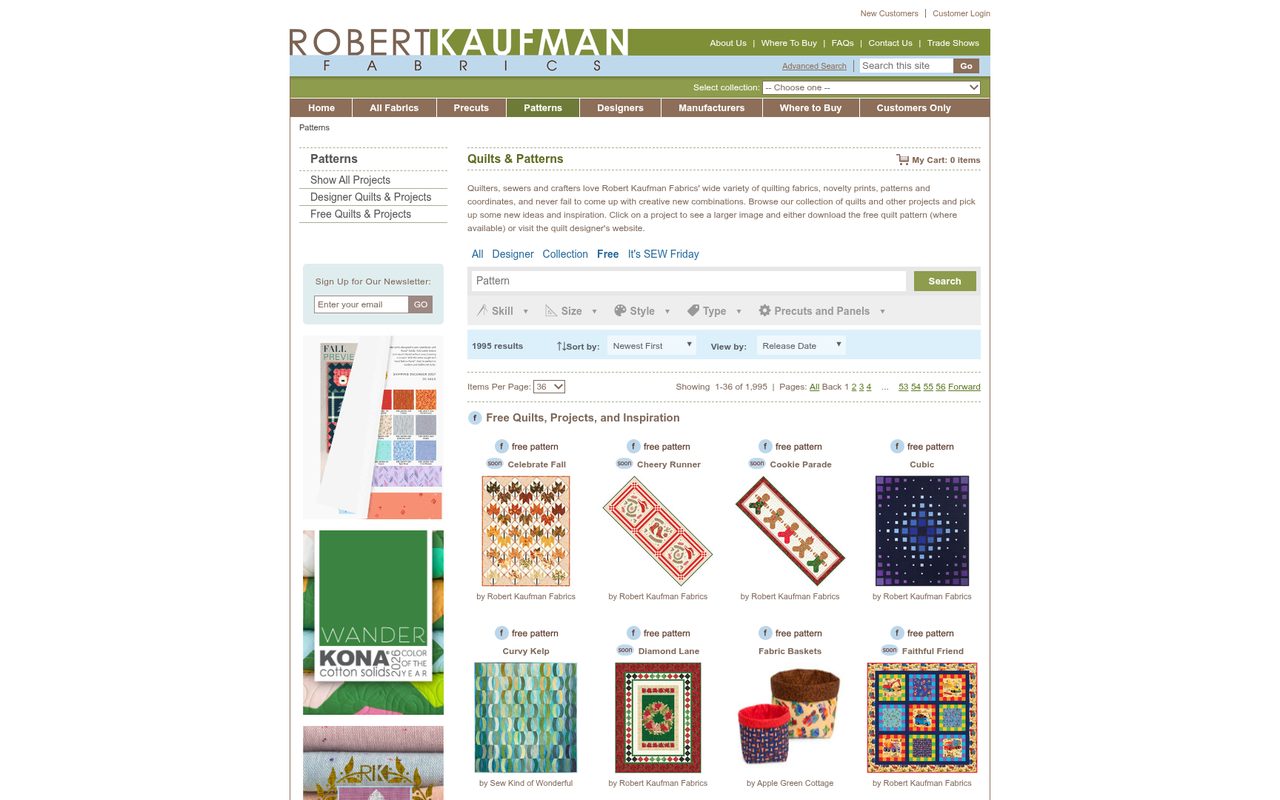
Robert Kaufman’s collection presents free quilt patterns alongside photographs and fabric information, making it useful when you want to connect a design with a particular fabric range. Open an individual quilt rather than assuming the gallery itself contains the instructions.
The selection includes different constructions and difficulty levels, so compare the materials and finished dimensions before downloading. Collection names help identify the original look, but discontinued prints may require substitutions. Save the pattern together with its source page so you can return for fabric details or updates later.
- Type
- Quilt pattern library
- Best for
- Matching printable quilt instructions to identifiable fabric collections
- License
- Free pattern downloads; individual pattern terms apply
- Price
- Free
Moda Fabrics
Quilt pattern library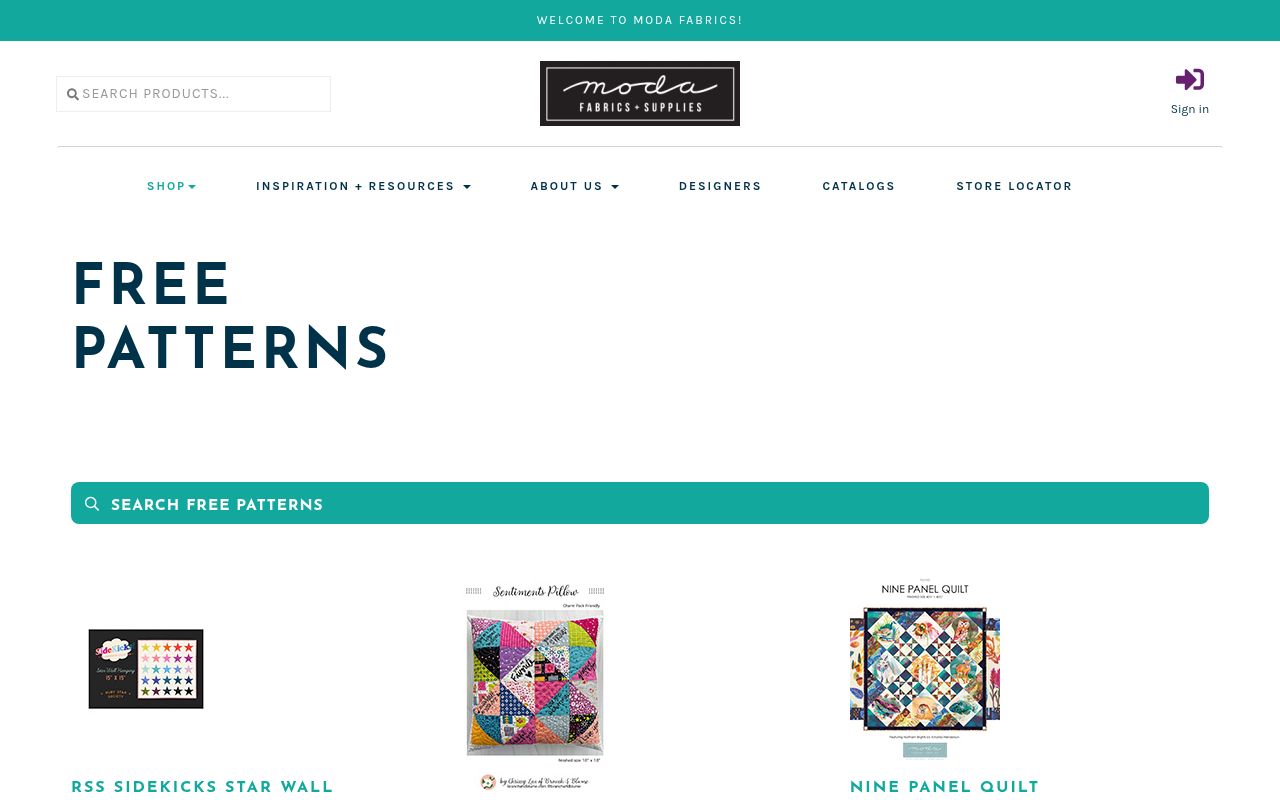
Moda’s Free Patterns archive mixes project announcements, downloadable designs, and instructional posts rather than behaving like one uniform PDF shelf. That makes it a good place to browse fabric inspiration, then investigate the actual access link. Expect projects connected to Moda designers and collections, with varying levels of explanation.
Look for the specific pattern attachment inside each entry before printing the surrounding article. Read the project requirements carefully, because a familiar precut name does not guarantee that one package supplies every background, border, or binding piece.
- Type
- Quilt pattern library
- Best for
- Exploring fabric collections, precuts, and publisher tutorials
- License
- Free patterns and project instructions; formats vary by entry
- Price
- Free
Riley Blake Designs
Quilt pattern library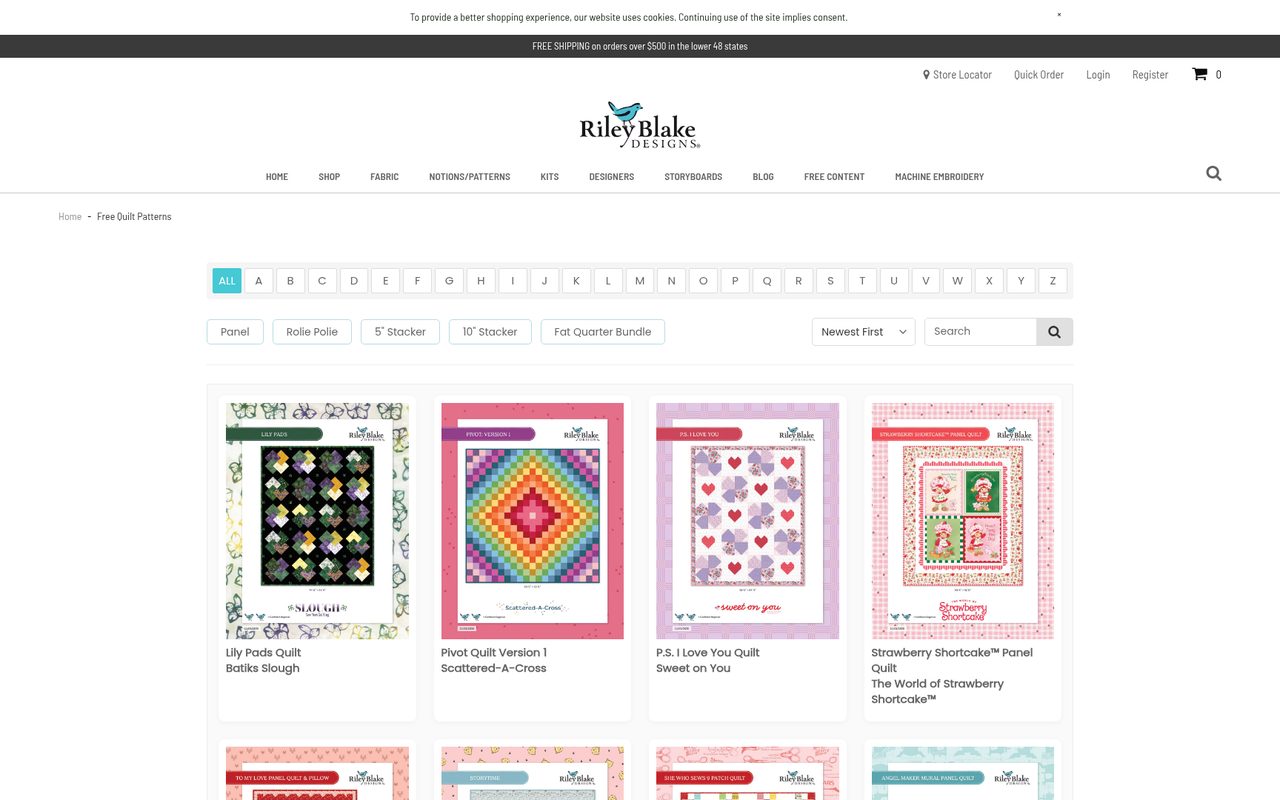
Riley Blake Designs provides a visual free-pattern gallery whose quilt images link to PDF files. The visible selection includes conventional patchwork, panel projects, and designs associated with named fabric collections. This direct approach suits quilters who prefer to inspect a printable document before reading a long blog post.
Check the collection and quilt title carefully, especially when several related designs appear together. Panel quilts need particular attention because replacing a panel with ordinary yardage changes the construction. Download the chosen PDF rather than saving only the thumbnail image.
- Type
- Quilt pattern library
- Best for
- Opening collection-specific quilt PDFs from a visual gallery
- License
- Free PDF links on the quilt-pattern gallery
- Price
- Free
Fat Quarter Shop
Quilt pattern library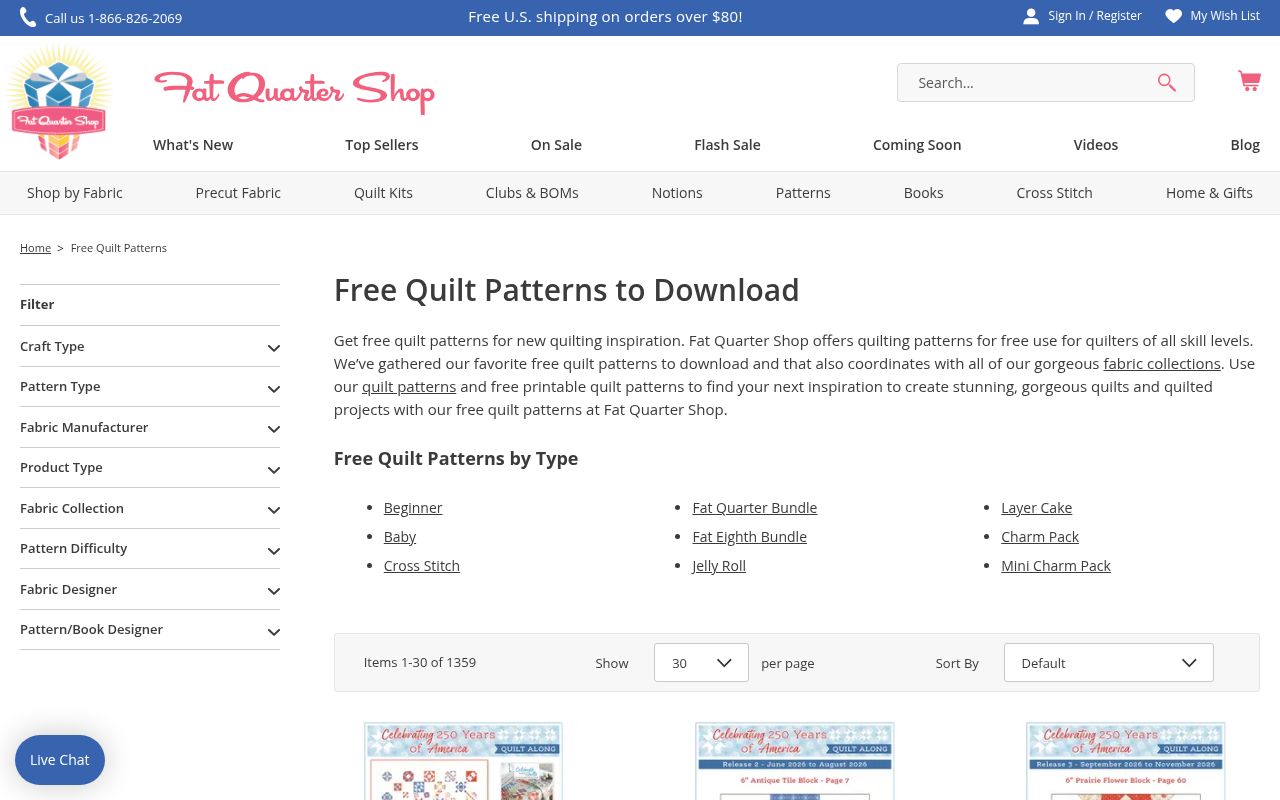
Fat Quarter Shop gathers free quilt patterns within a working fabric store, so pattern listings and supply purchases share the same environment. Use the free collection as your starting point, then inspect the individual project for its download route and material list.
The setting is especially convenient when you want to compare precuts and coordinating yardage while planning a quilt. It is not necessary to treat every pictured bundle as a requirement. Check the pattern’s actual quantities, background fabric, and finishing supplies before adding anything to a shopping cart.
- Type
- Quilt pattern library
- Best for
- Comparing retailer-hosted patterns with precut shopping options
- License
- Free patterns; supplies and other shop products sold separately
- Price
- Free
Art Gallery Fabrics
Quilt pattern library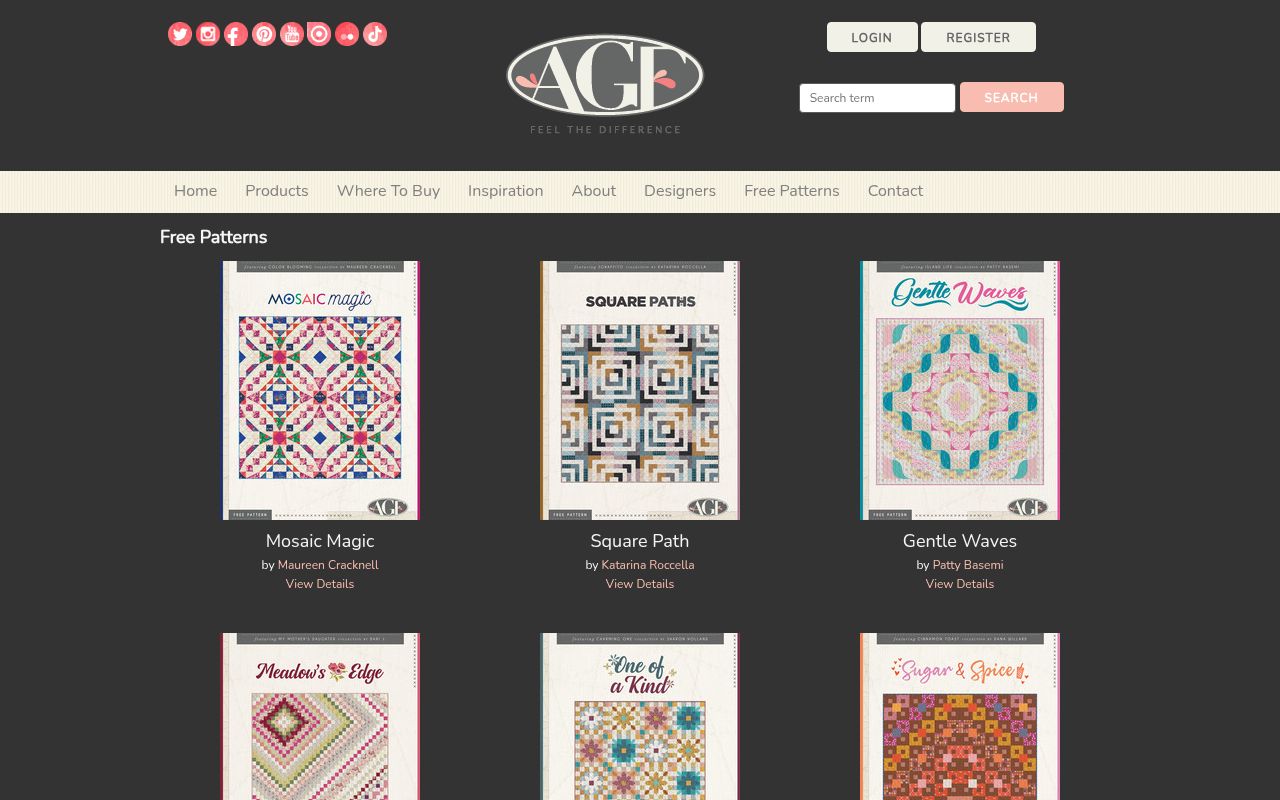
Art Gallery Fabrics’ projects page offers a thumbnail-based pattern collection with named quilt designs and links to separate project pages. The images make it easy to compare bold geometry, quieter palettes, and the way prints behave across a quilt top.
Open the chosen project to locate the pattern and fabric details, rather than expecting the gallery thumbnail to be a printable instruction sheet. This source works well when you want inspiration tied to a fabric designer. Compare values and print scale when translating a pictured collection into fabrics already in your stash.
- Type
- Quilt pattern library
- Best for
- Finding contemporary quilts through fabric-collection project pages
- License
- Free project patterns; check the selected project for its download
- Price
- Free
Benartex
Quilt pattern library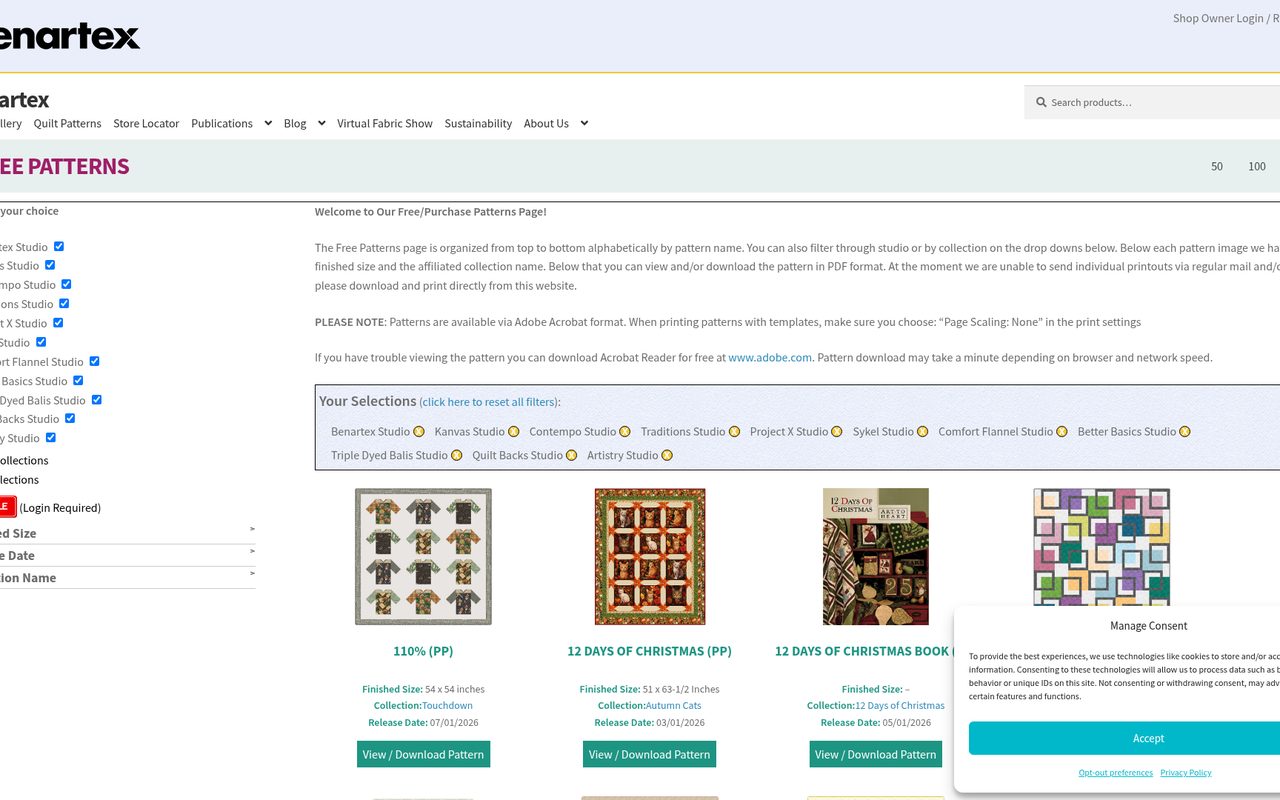
Benartex maintains an extensive free-pattern archive with project images and links attached to named designs. The collection rewards targeted browsing: start with a visual idea or fabric family, then open the relevant instructions. A large archive can contain projects from different collection seasons, so do not assume the original fabric is still stocked.
Read the cutting and yardage information before planning substitutions, particularly for distinctive prints. Keep the designer credit with your saved copy, and check the selected document for any permissions or construction notes that the gallery does not display.
- Type
- Quilt pattern library
- Best for
- Browsing an extensive fabric-linked project archive
- License
- Free patterns listed by the fabric publisher
- Price
- Free
Windham Fabrics
Free PDF pattern collection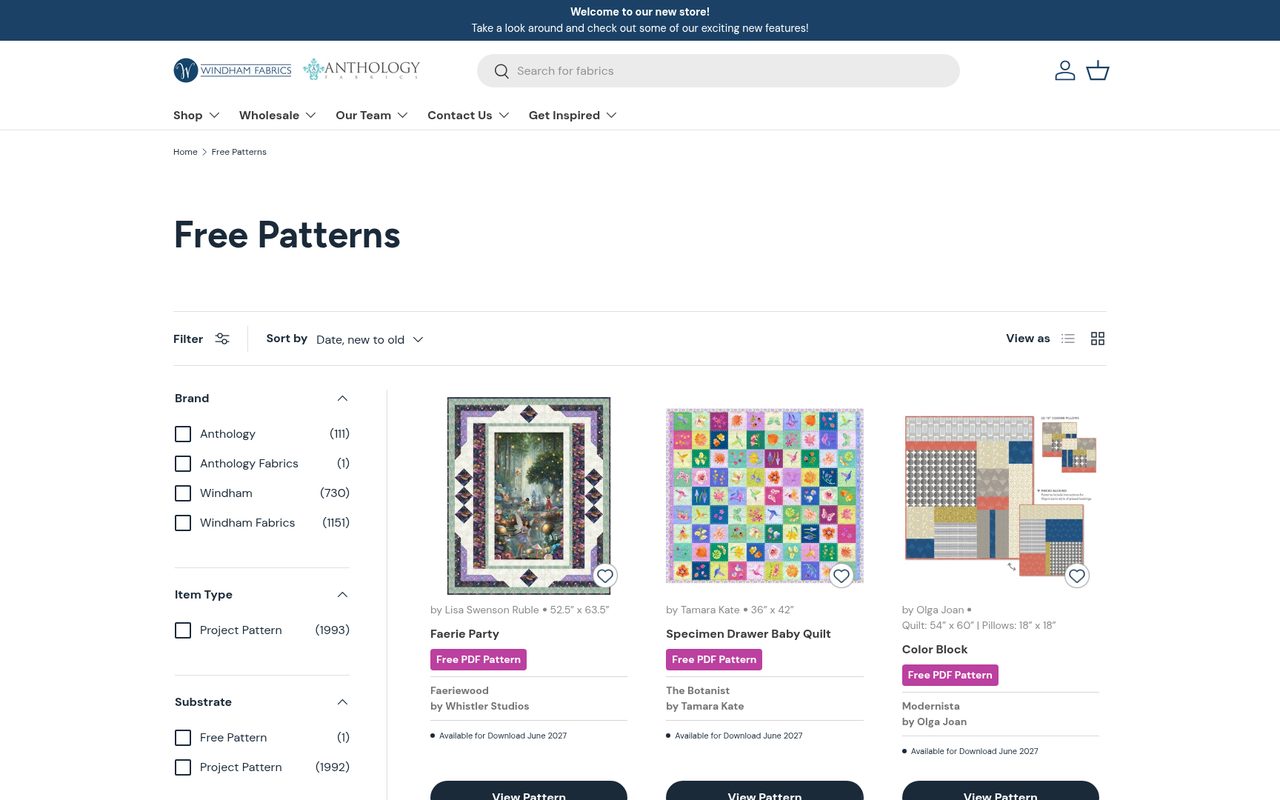
Windham Fabrics hosts one of the largest manufacturer collections of free PDF patterns, with close to two thousand projects and more than five hundred quilts. The shop-style page has filters for project type, fabric requirement, theme, technique and designer, which makes narrowing such a big archive surprisingly quick.
A small group of patterns comes from the Iowa Quilt Museum, alongside designs by Windham’s own designers. Each pattern is written around a specific Windham collection, so expect to substitute prints from your stash or local shop.
- Type
- Free PDF pattern collection
- Best for
- Searching a manufacturer archive for fabric-led quilt ideas
- License
- Free PDF patterns; designer credits shown on each listing
- Price
- Free
Henry Glass Fabrics
Quilt pattern library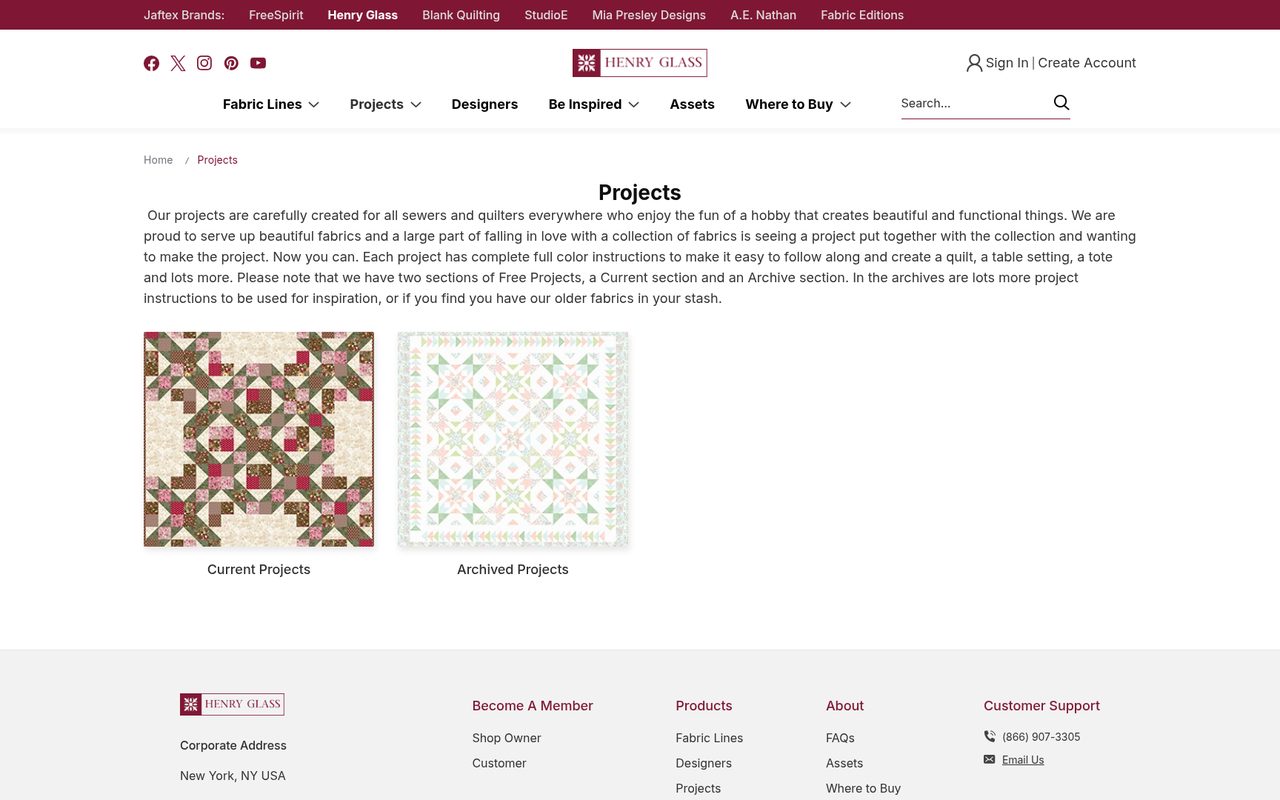
Henry Glass Fabrics offers a Free Projects section as a starting point for quilts connected with its fabric ranges. Browse the project entries, then open the selected design to find the instruction file and materials. This manufacturer-led approach helps you understand how a fabric collection can work across an entire quilt.
Check the project-specific requirements before assuming a bundle or panel will be sufficient. The page is a library entrance rather than a single universal pattern, so keep each downloaded design with its own credits and any accompanying usage notices.
- Type
- Quilt pattern library
- Best for
- Finding publisher-hosted projects alongside current fabric collections
- License
- Free projects; individual downloads retain their own notices
- Price
- Free
Missouri Star Quilt Company
Quilt pattern library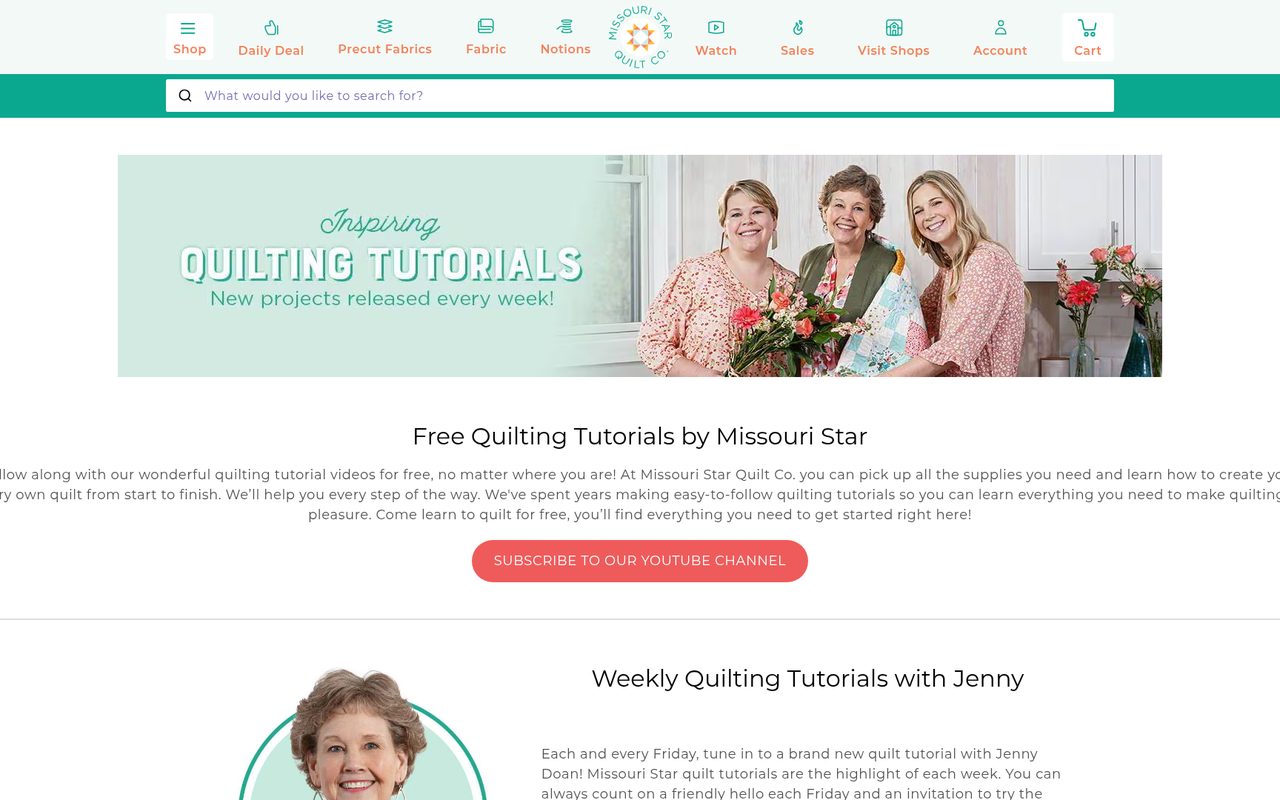
Missouri Star’s free quilting tutorials provide a demonstration-led alternative to browsing only PDF covers. The tutorial landing page points you toward individual lessons, where you can investigate the featured quilt and its supporting information. This is helpful when you want to see a technique before committing fabric to it.
Check each lesson for written or printable resources, since a free video does not automatically mean an identical PDF is included. Supplies and related products remain separate purchases. Bookmark the actual lesson once you find a construction method that suits your confidence level.
- Type
- Quilt pattern library
- Best for
- Learning through demonstrations before choosing a printable project
- License
- Free online quilting tutorials; check each project for printable materials
- Price
- Free
Polka Dot Chair
Quilt pattern library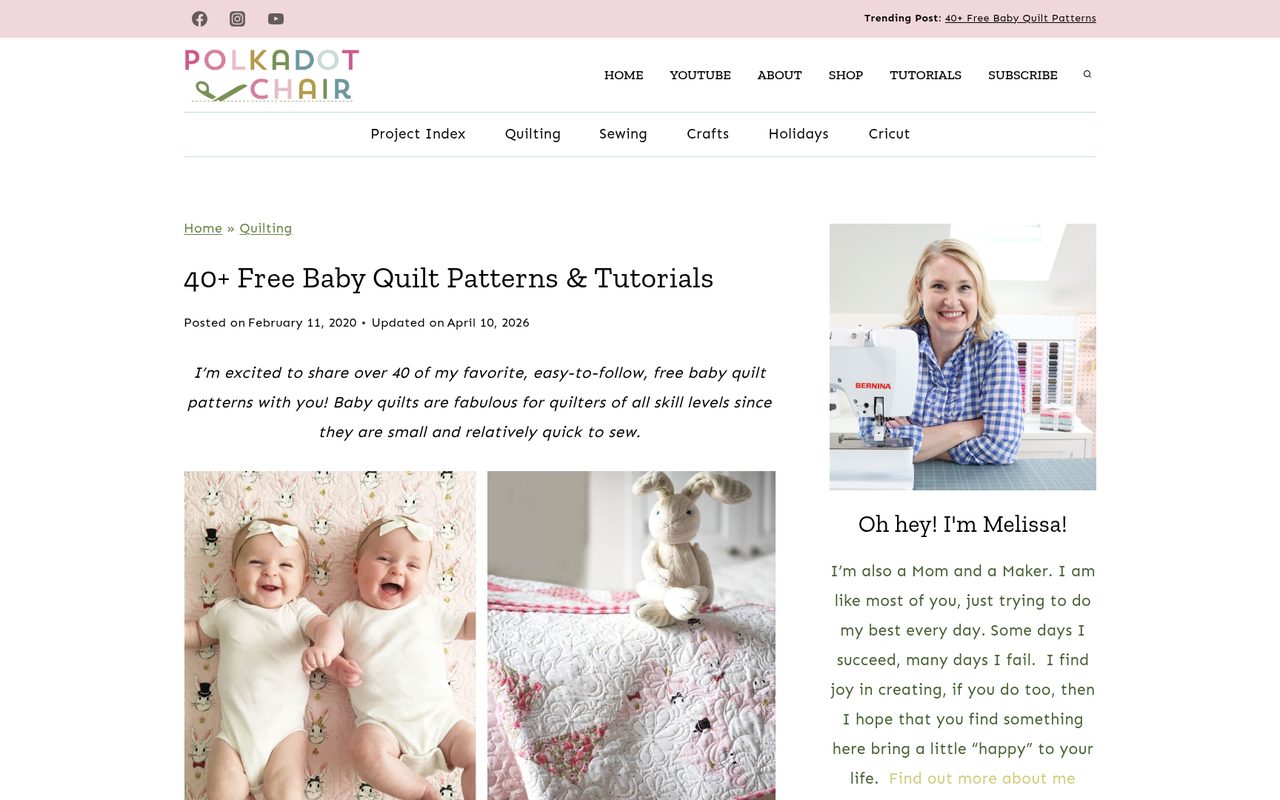
Polka Dot Chair’s baby quilt roundup is a useful whole-site doorway for smaller projects, but it explicitly includes both free and paid recommendations. Follow a project link and identify the free reading option before assuming every button downloads a complimentary file.
Several tutorials distinguish online instructions from printable editions, which helps you decide whether browser reading will suit your workspace. The roundup also introduces different constructions rather than repeating one block. Use it for discovery, then keep the original project page as your working reference for measurements, cutting directions, and finishing notes.
- Type
- Quilt pattern library
- Best for
- Discovering small quilts while distinguishing tutorials from paid PDFs
- License
- Free and paid projects are mixed; follow the free tutorial option
- Price
- Free instructions; optional purchases separate
Read the fabric requirements before you shop
Every free quilt pattern opens with a fabric requirements list, and it is worth reading twice. Note whether yardage assumes 42-inch usable width after washing, and whether backing and binding are included. Fabric company patterns often name the exact collection used, but any similar prints in the same values will work.
Write the list on your phone before visiting a shop. Add a small safety margin, about a quarter yard per fabric, for cutting mistakes and shrinkage. Matching a discontinued print is hard, so buying slightly more on day one usually costs less than hunting for one missing fat quarter later.
Know your precuts by size, not by nickname
Precuts make free patterns faster, but the names are easy to mix up. A charm pack holds five-inch squares, a layer cake holds ten-inch squares, and a jelly roll holds two-and-a-half-inch strips. Fat quarters measure about eighteen by twenty-two inches, while fat eighths are half that size.
Check how many pieces the pattern expects and whether it allows for pinked edges. Some designers measure precuts from the tip of the zigzag, others from the valley. Count the pieces in your bundle before cutting, because brands vary and a short bundle can leave a row unfinished.
Print PDFs at actual size
Many free quilt patterns include templates or foundation pages that must print at full size. Choose actual size or 100 percent in the print dialog, never fit to page. Measure the one-inch test square before printing every page, because a template that shrinks slightly will throw off every seam.
Save each PDF with the designer and pattern name in the filename. Fabric company links sometimes move when a collection is retired, so a local copy protects you from losing a pattern halfway through a project. Keep the download page link too, so you can check later for corrections.
Finished size versus unfinished size
Quilt patterns describe blocks in two ways. The unfinished size includes seam allowance on every edge, while the finished size is what shows after the block is sewn into the quilt. A twelve-and-a-half-inch unfinished block becomes a twelve-inch finished block.
Check your first block against the unfinished measurement before making the rest. If it comes out small, look at your seam allowance and pressing before blaming the pattern. Correcting one block is quick, but discovering the problem after forty blocks means hours of unpicking or trimming.
Use free patterns with respect
A free pattern is a gift from the designer or fabric company, and it remains their copyrighted work. Share the link rather than the PDF, credit the designer when you post photos, and use the official hashtag if there is one. That visibility is often what keeps free patterns coming.
Rules for selling finished quilts differ between publishers. Some welcome small sales with credit, others restrict commercial use, and many say nothing at all. Read the notes on the pattern itself and ask the publisher when in doubt, especially before making quilts to sell at markets.