
Finding free diverse stock photos should involve more than adding a demographic keyword to a general image search. Specialist collections make it easier to discover people who are often missing from conventional business, lifestyle, and technology imagery.
The sources below cover Black and Brown communities, disabled people, older adults, plus-size people, and LGBTQIA+ professionals. They offer real photography rather than illustrations or generated faces, giving designers useful starting points for more representative websites, presentations, and editorial projects.
The strongest inclusive people imagery shows people doing things: leading a meeting, spending time with friends, using technology, or relaxing at home. It does not reduce someone to a diagnosis, identity label, or symbolic diversity role.
Several collections here were created by the communities represented, which adds valuable context to the photographs. Use that context when selecting images, and look for an activity and setting that genuinely match the message you need to communicate.
Free downloads do not automatically mean unrestricted commercial use. Some libraries allow advertising and editing; others require attribution, prohibit adaptations, or reserve free access for noncommercial projects.
Each recommendation includes a short licence summary, but the source terms and individual image information should decide your final choice. Keep a record of those permissions before publishing, particularly when a photograph includes identifiable people or will appear beside health, political, financial, or other sensitive claims.
Quick picks at a glance
| # | Resource | License | Best for |
|---|---|---|---|
| 1 | Nappy | CC0 stated; observe published usage restrictions | Everyday imagery of Black and Brown people |
| 2 | Disabled And Here | CC BY; attribution required | Intersectional disability representation beyond medical settings |
| 3 | AllGo | Free for all uses; credit requested, not required | Body-inclusive home and workplace storytelling |
| 4 | WOCinTech Chat | Creative Commons Attribution; credit required | Showing women of colour doing technical work |
| 5 | Age Without Limits | Free use under library terms; notify before paid advertising | Realistic representation of adults over fifty |
| 6 | Images of Empowerment | CC BY-NC 4.0; credit required; noncommercial only | Noncommercial stories about women’s work and health |
| 7 | CreateHER Stock | Standard non-exclusive licence; free images noncommercial only | Personal creative projects centring Black women |
| 8 | Queer in Tech | CC BY 3.0 US; attribution required | Queer visibility in technical and leadership roles |
| 9 | Disability:IN | CC BY-ND 4.0; credit required; no shared adaptations | Disability-inclusive recruitment and corporate communications |
| 10 | Disability Is Beautiful | Free personal and commercial use; credit optional; restrictions apply | Community-led images with flexible editing permission |
Nappy
People stock photography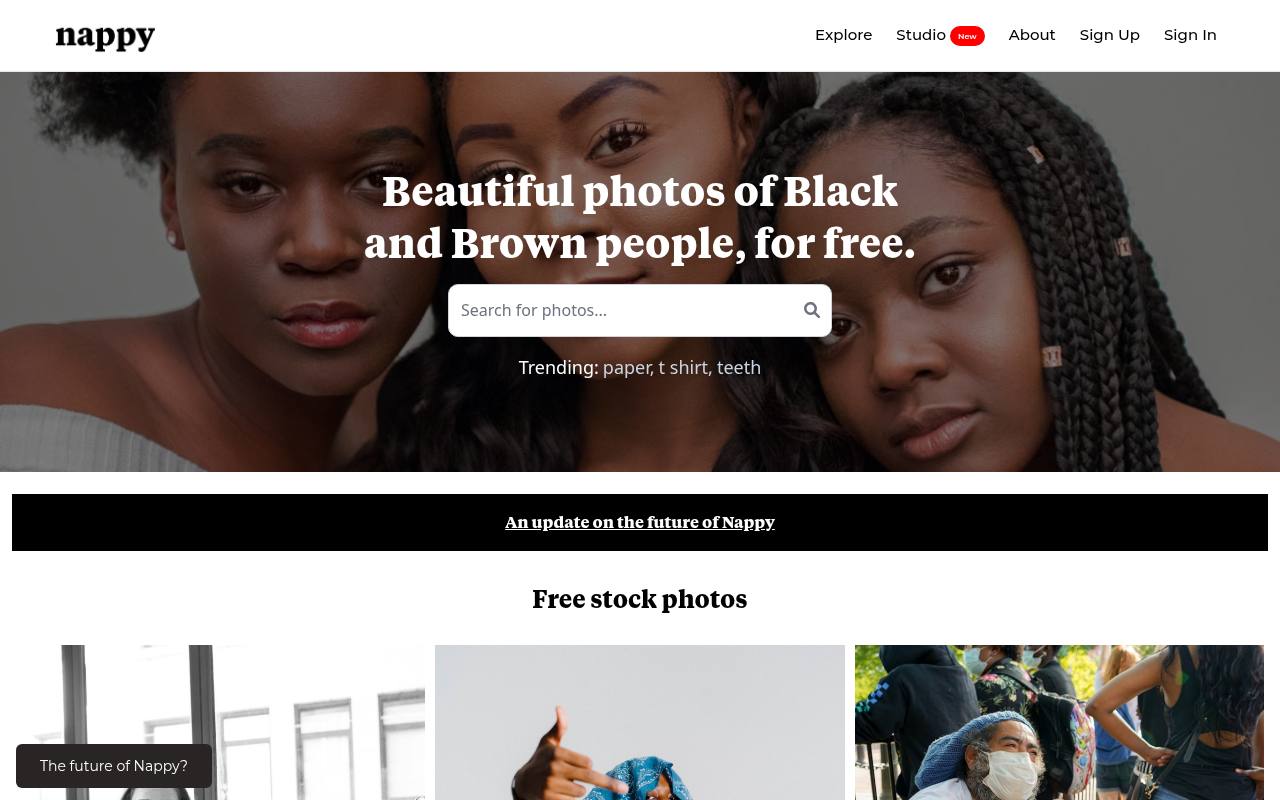
Nappy puts Black and Brown people at the centre of its free photography library, with images spanning portraits, work, lifestyle, and community scenes. Photo panels offer several download sizes, including original files where available, so you can choose a smaller asset for a layout draft.
Its licence page states Creative Commons Zero, with credit appreciated rather than required. The same page also lists restrictions against degrading subjects, reposting to other stock sites, and reselling without significant modification. Read those published conditions rather than treating a public-domain tag as the whole usage policy.
- Type
- People stock photography
- Best for
- Everyday imagery of Black and Brown people
- License
- CC0 stated; observe published usage restrictions
- Price
- 100% free
Disabled And Here
Disability-led photo collection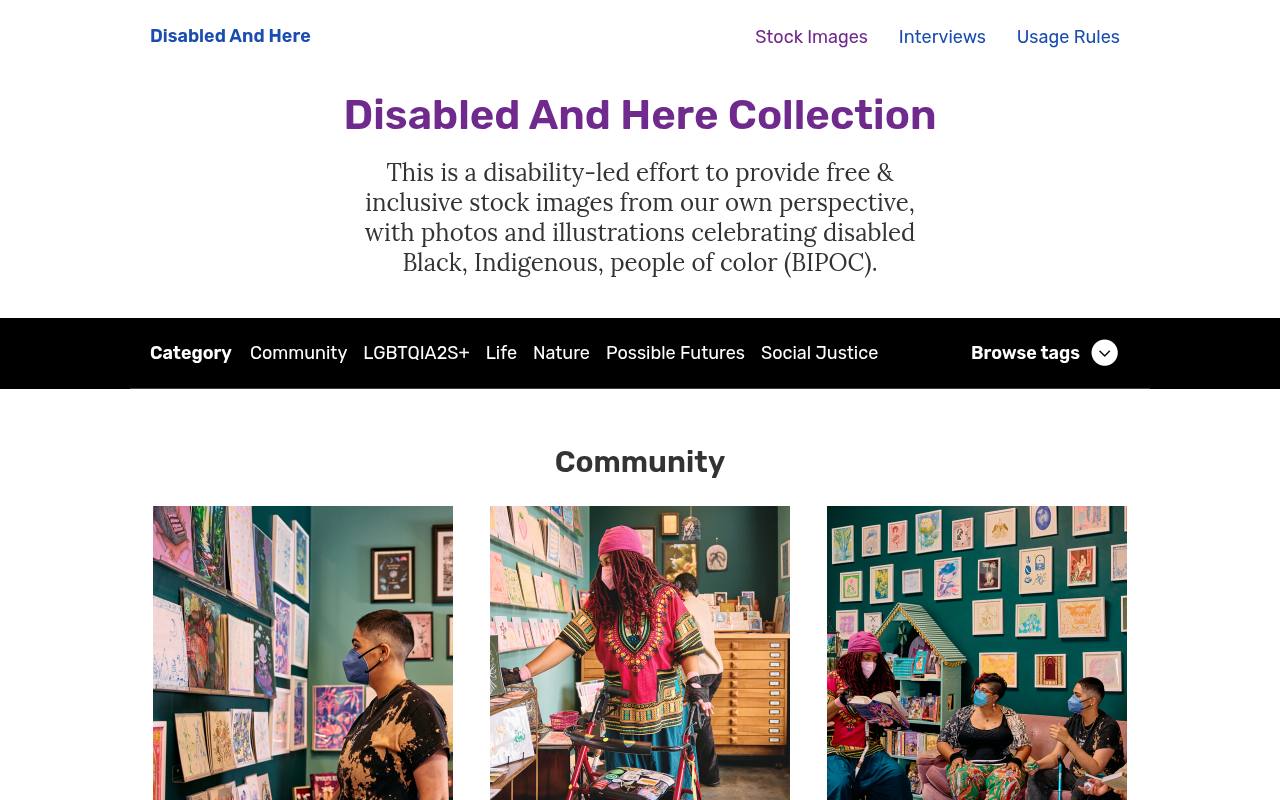
Disabled And Here is a disability-led collection celebrating disabled Black, Indigenous, and other people of colour, including varied gender identities and body types. The collection combines photography and illustration, so select the photographs when you need real people rather than drawn assets.
Browsing categories include community, life, nature, and LGBTQIA2S+ themes, supported by detailed tags. Under its Creative Commons attribution terms, photographs can be used and adapted for free with credit to Disabled And Here. The usage page confirms participant releases and rules out pornographic or defamatory purposes, while encouraging thoughtful language and context.
- Type
- Disability-led photo collection
- Best for
- Intersectional disability representation beyond medical settings
- License
- CC BY; attribution required
- Price
- 100% free
AllGo
Plus-size lifestyle photo collections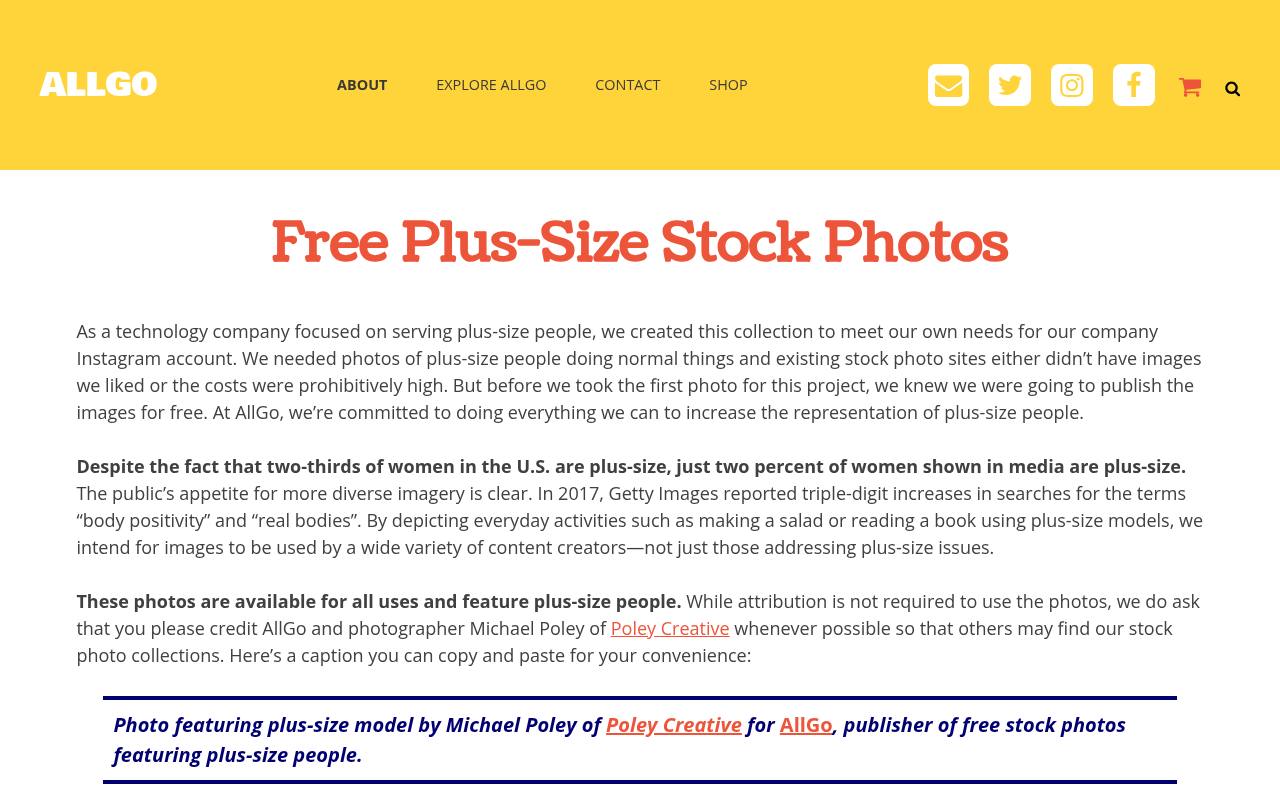
AllGo created its plus-size stock photos to address a practical gap: pictures of larger people simply living their lives. Its home and office collections emphasise activities rather than body size, making them useful for general workplace, relationships, and lifestyle content.
The home collection includes relaxed social settings and couples; the office collection presents people as workers and leaders. AllGo explicitly makes the photographs available for all uses, with attribution requested but not compulsory. Its suggested credit names both AllGo and photographer Michael Poley of Poley Creative, helping future readers find the original project.
- Type
- Plus-size lifestyle photo collections
- Best for
- Body-inclusive home and workplace storytelling
- License
- Free for all uses; credit requested, not required
- Price
- 100% free
WOCinTech Chat
Technology workplace photo collection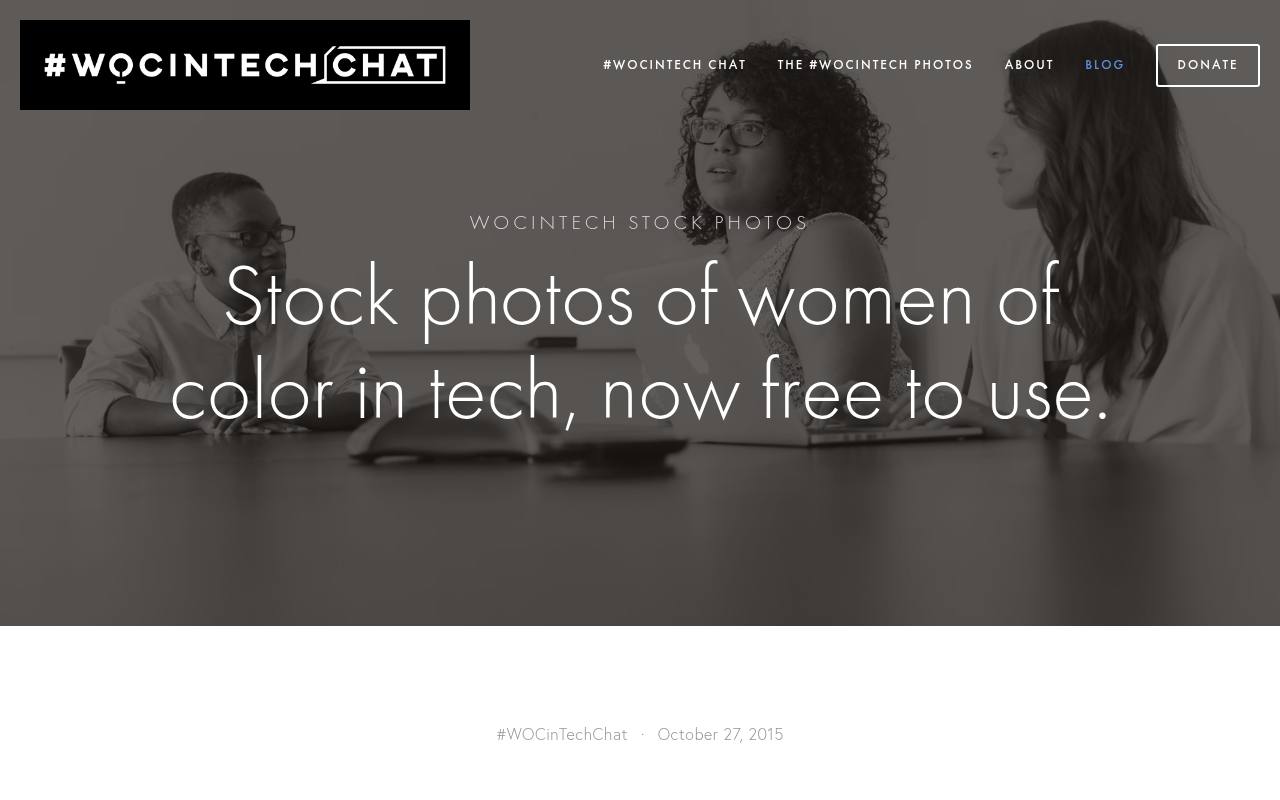
WOCinTech Chat tackles the lack of women of colour visibly doing technical work in stock imagery. Its original release links to the free Flickr album and explains that the photographs may be copied, distributed, and displayed when the project receives attribution.
Later shoots expanded the subject matter to meetings, brainstorming, whiteboarding, and coding in real office environments. This makes the collection particularly relevant to engineering recruitment and technology education, not just diversity announcements. Follow the attribution requirement and credit #WOCinTech Chat; check the selected Flickr image for its specific licence link before publication.
- Type
- Technology workplace photo collection
- Best for
- Showing women of colour doing technical work
- License
- Creative Commons Attribution; credit required
- Price
- 100% free
Age Without Limits
Age-positive image library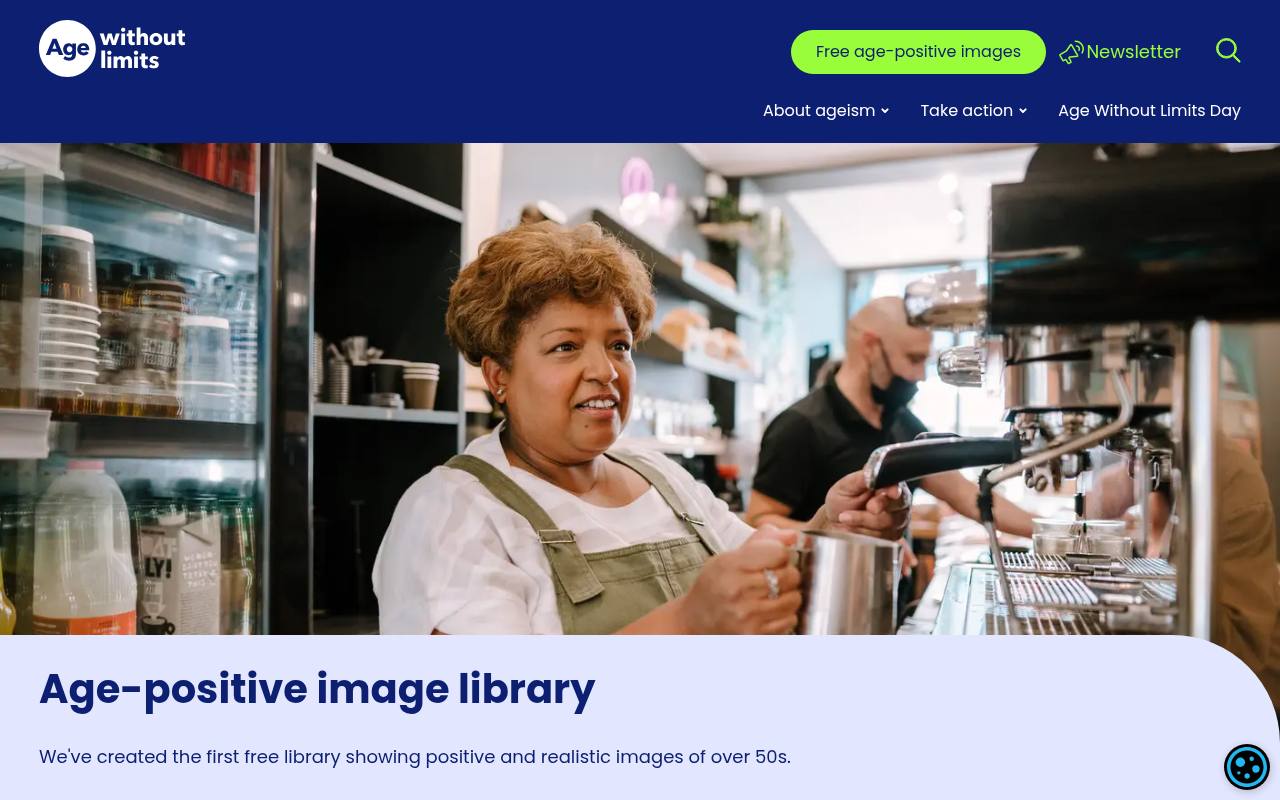
Age Without Limits offers an age-positive image library designed to challenge narrow depictions of people over fifty. Its documentation describes keyword search and filters for topics such as work, digital inclusion, and health, plus options for individuals and groups. An optional account lets you save personalised collections and avoid re-entering details for downloads.
The library is free for individuals and organisations under its published terms, rather than a generic stock marketplace subscription. For paid advertising campaigns, the website asks users to contact the team in advance, an important step for campaign planners to include in production schedules.
- Type
- Age-positive image library
- Best for
- Realistic representation of adults over fifty
- License
- Free use under library terms; notify before paid advertising
- Price
- 100% free
Images of Empowerment
Documentary people photography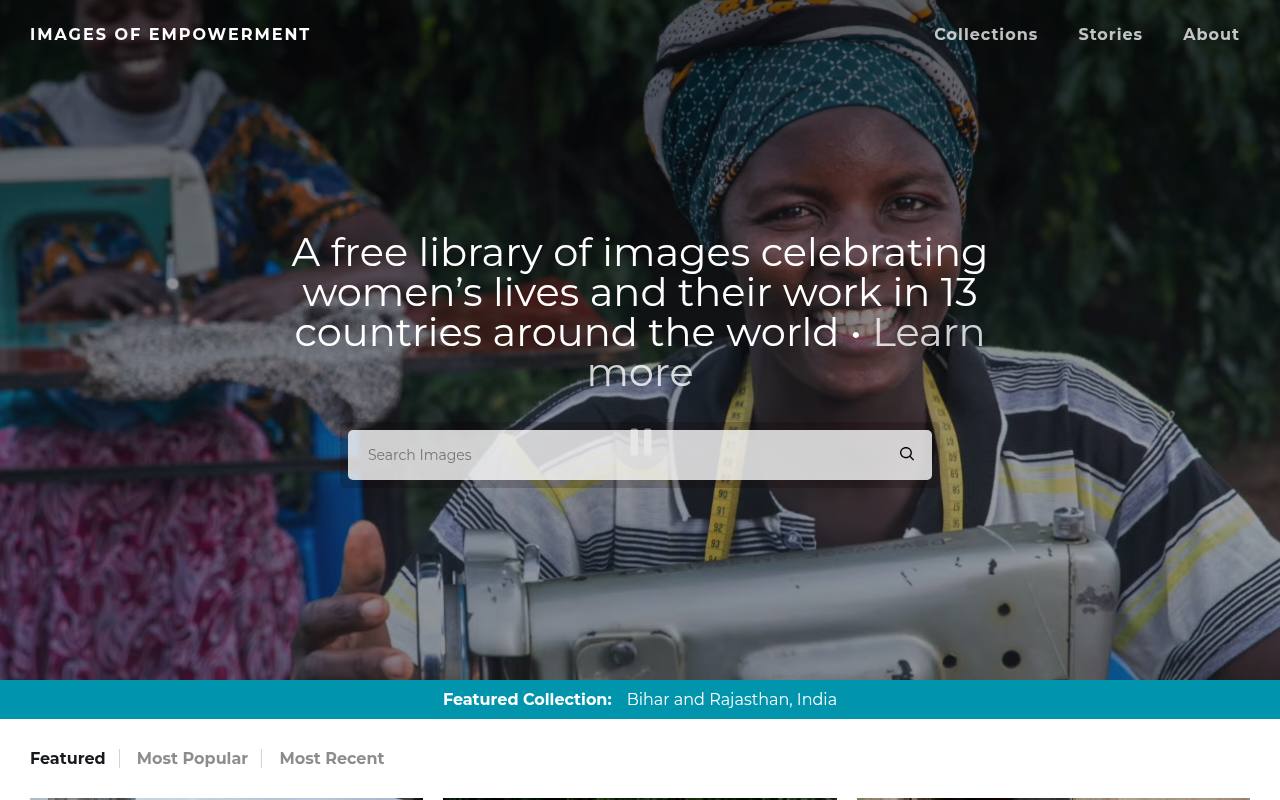
Images of Empowerment documents women’s lives and work across countries including Ghana, India, Peru, and Uganda. Its search and collections connect paid work, family life, and reproductive health without making poverty the only story. The photographs are free under CC BY-NC 4.0, so this is a strong option for suitable noncommercial projects rather than a ready-made advertising library.
The licensing page specifies a credit naming the photographer, Getty Images, and Images of Empowerment. It also explains different release statuses; inspect the chosen image carefully instead of assuming every subject has an identical model release.
- Type
- Documentary people photography
- Best for
- Noncommercial stories about women’s work and health
- License
- CC BY-NC 4.0; credit required; noncommercial only
- Price
- Free for noncommercial use
CreateHER Stock
Black women lifestyle photo packs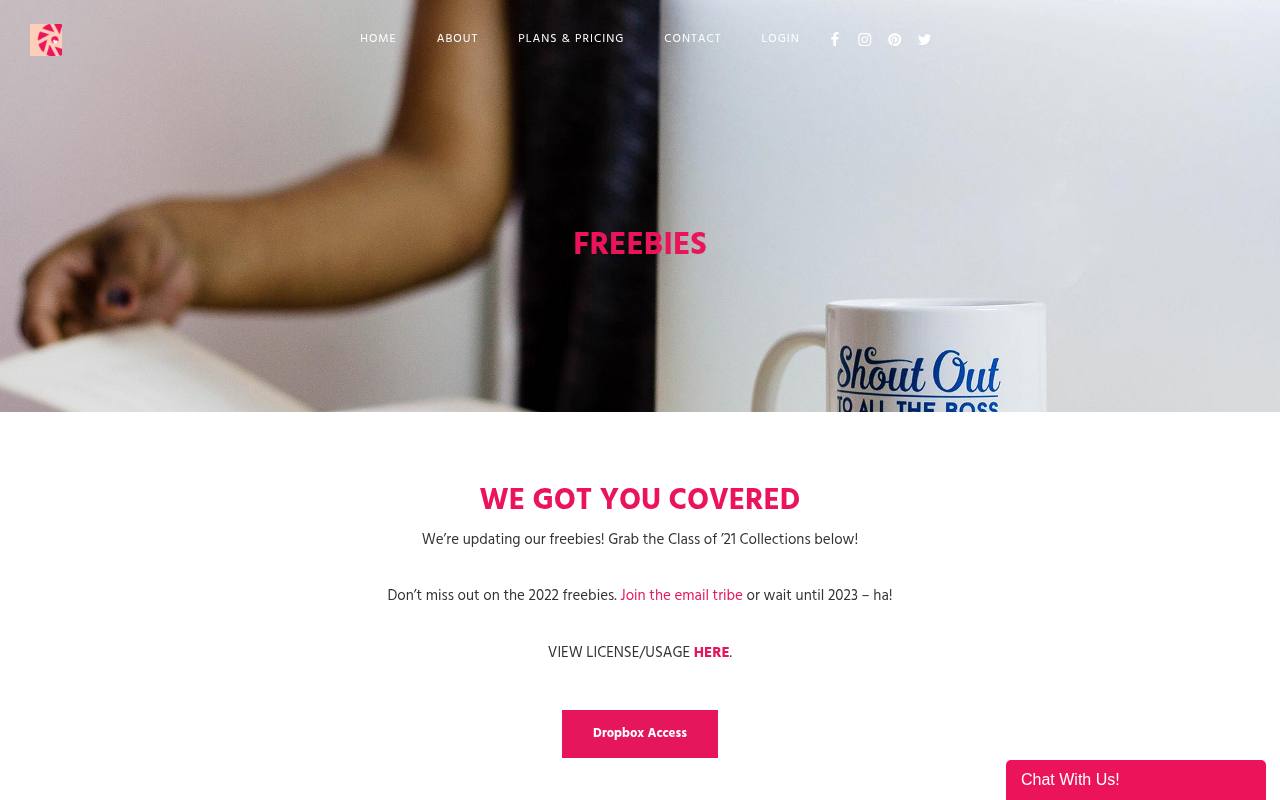
CreateHER Stock focuses on Black women’s everyday lives, offering an alternative to generic lifestyle pictures that overlook women of colour. Its freebies page links to the Class of ’21 packs through Dropbox, separate from the platform’s wider paid offering.
The important distinction is noncommercial free use: its licensing page says the standard non-exclusive terms also apply to free-gallery images, and using the content for profit requires express permission and appropriate extended licensing. That makes the free packs better suited to qualifying personal projects than client advertising. Read the permitted-editing and redistribution conditions before incorporating a download into a deliverable.
- Type
- Black women lifestyle photo packs
- Best for
- Personal creative projects centring Black women
- License
- Standard non-exclusive licence; free images noncommercial only
- Price
- Free collection + paid options
Queer in Tech
LGBTQIA+ workplace photo collection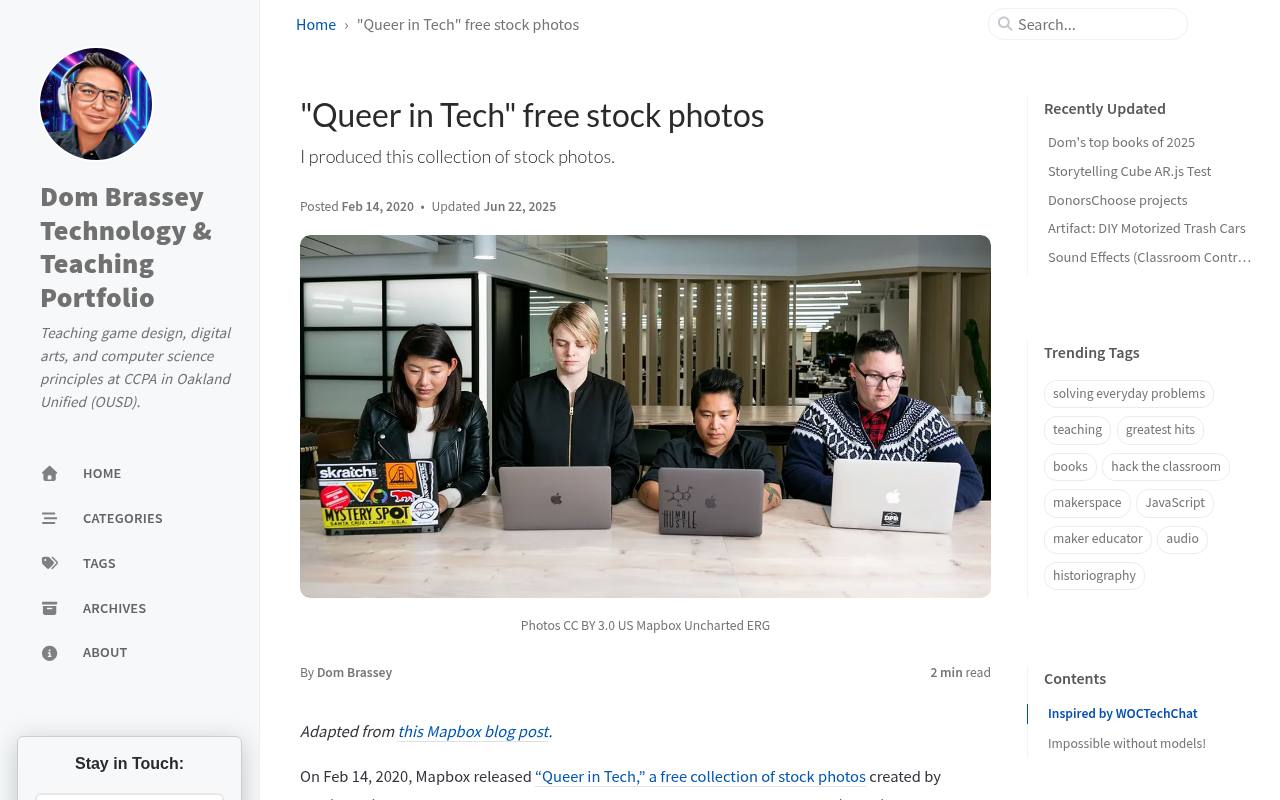
Queer in Tech was produced through Mapbox Uncharted ERG to increase visibility for LGBTQIA+ and gender-nonconforming people in technology. Producer Dom Brassey’s project page links directly to the Flickr collection and describes scenes of collaboration, leadership, design, engineering, and mobile development.
Unlike an identity-only portrait set, the photographs can support everyday stories about teams building products. They are offered under CC BY 3.0 US, with attribution required. The project page supplies the credit wording “Photos: CC BY 3.0 US Mapbox Uncharted ERG” and explicitly discusses uses including slide decks, event promotion, and digital advertising.
- Type
- LGBTQIA+ workplace photo collection
- Best for
- Queer visibility in technical and leadership roles
- License
- CC BY 3.0 US; attribution required
- Price
- 100% free
Disability:IN
Corporate disability stock photography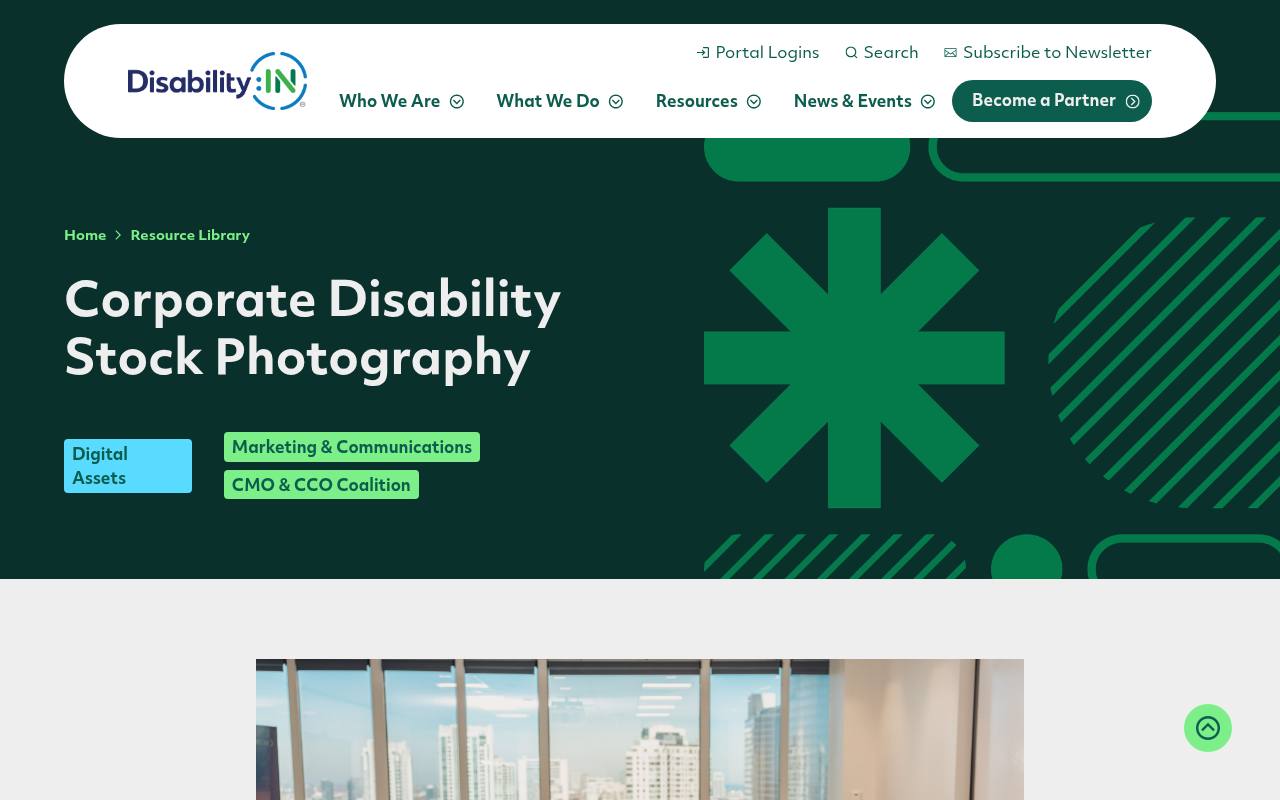
Disability:IN’s corporate disability photography is built for recruitment, marketing, internal communications, and social media. The resource page offers a high-resolution ZIP alongside a separate image-descriptions document, a useful combination when handing assets to communications teams. Photographer Jordan Nicholson is credited, and the page introduces participating models with their stated disabilities and pronouns.
The photos use CC BY-ND 4.0, which requires attribution and does not permit sharing adapted versions. Disability:IN also states that it has secured appropriate releases from identifiable participants. Preserve the photographs’ integrity rather than assuming that a free download permits composite advertising treatments.
- Type
- Corporate disability stock photography
- Best for
- Disability-inclusive recruitment and corporate communications
- License
- CC BY-ND 4.0; credit required; no shared adaptations
- Price
- 100% free
Disability Is Beautiful
Community-contributed disability photography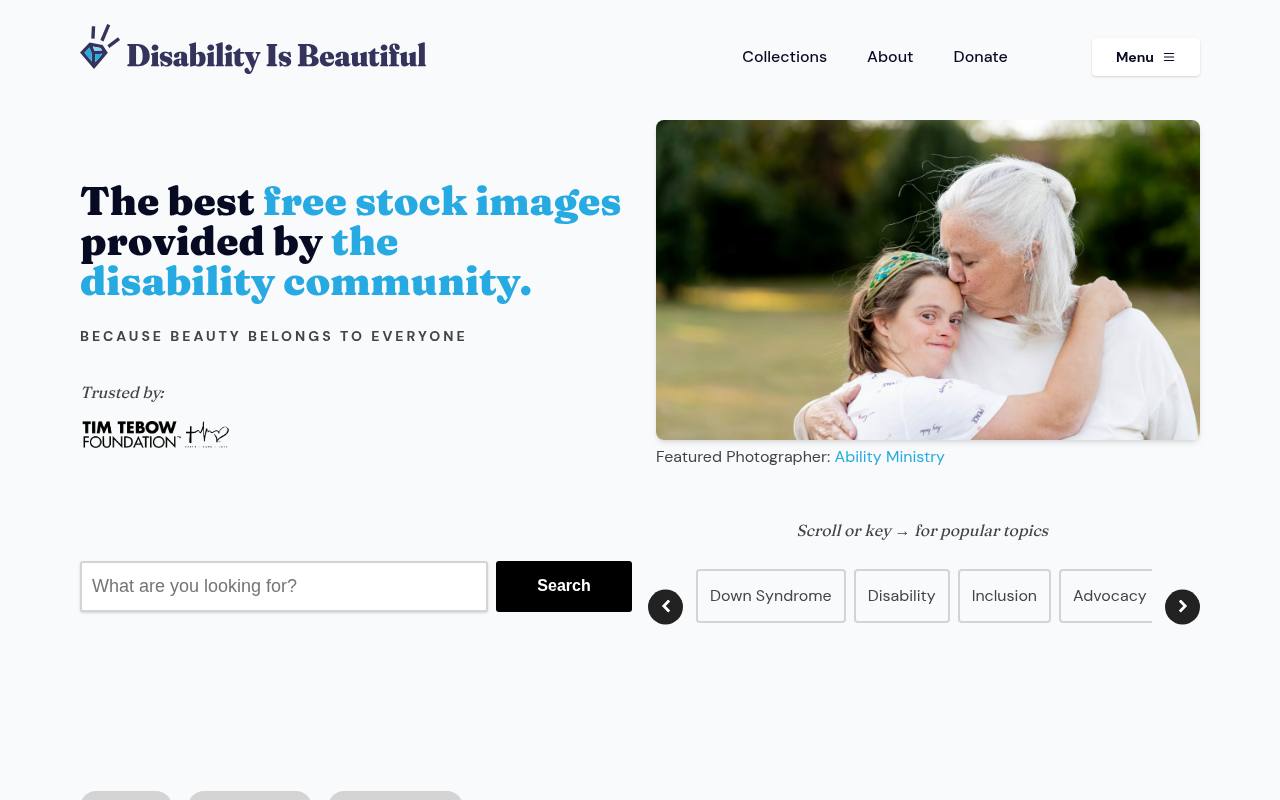
Disability Is Beautiful hosts community-provided stock photography intended to counter stigma and broaden who appears in everyday visual media. Its gallery includes photographer credits and image descriptions, useful starting points when assessing both the scene and its source. The about page permits personal and commercial use, allows modification, and makes attribution optional, although appreciated.
It prohibits negative or offensive portrayals, selling unaltered photographs as standalone products, and redistributing images through competing stock platforms. It also forbids implying endorsement by depicted brands or products. Choose photographs for their actual setting, and keep the full restrictions with your downloaded assets.
- Type
- Community-contributed disability photography
- Best for
- Community-led images with flexible editing permission
- License
- Free personal and commercial use; credit optional; restrictions apply
- Price
- 100% free
Choose the activity before the identity
Start your search with what people are doing and the story you need to tell. A technology article needs relevant work scenes, while a community event announcement may benefit from social interaction. Then consider who is represented across the complete page or campaign. One conspicuously diverse photograph cannot compensate for an otherwise narrow visual selection.
Separate free access from commercial permission
Check commercial use permissions before putting an image into a client website, sponsored post, or advertisement. A nonprofit organisation can still undertake uses that need closer licensing review, and an educational subject does not automatically make every use noncommercial.
If the intended purpose is unclear under a source’s terms, ask the copyright holder rather than guessing.
Distinguish attribution and adaptation requirements too. CC BY generally permits adaptation with appropriate credit and change notices, while CC BY-ND restricts sharing adaptations. A strongly cropped banner, colour treatment, or composite can raise questions under no-derivatives terms. Choose a more permissive source or obtain specific permission when your layout depends on substantial visual changes.
Keep a reusable attribution record
Save the original image URL, photographer name, collection credit, licence link, and download date alongside each source file. Copy any special credit wording at the same time. This small record prevents confusion when an image moves between a designer, editor, and social media manager, and makes later attribution corrections much easier to manage.
Respect the people behind the photographs
Never infer private personal information from someone’s appearance. A picture should not imply that its subject uses your service, has a particular health condition, supports a political position, or endorses a product without suitable permission.
Even a broad copyright licence does not erase privacy, publicity, trademark, or defamation concerns surrounding the way an image is presented.
Prepare accessible and efficient image files
Write context-specific alt text that communicates what matters in the image for that page. Describe relevant actions and surroundings without inventing identities or diagnoses. Collection descriptions can help establish context, but do not paste them automatically: a photograph used as decoration may need empty alternative text, whereas an instructional image may require more detail.
Keep an untouched original and export appropriately sized web images for delivery. Use modern compression where your publishing system supports it, check faces at mobile sizes, and avoid placing important text over busy backgrounds.
Before cropping away mobility aids, colleagues, or environmental details, consider whether the edit changes the meaning or undermines the representation that made the photograph valuable.
Build inclusion into the whole workflow
Review representation across the campaign, not only individual downloads. Who appears as an expert, a customer, a leader, or someone receiving help? Rotating those roles is often more meaningful than repeatedly using one image to signal inclusion. Where possible, involve people from the communities represented in the review, especially for sensitive or high-visibility communications.
Treat these free photo collections as starting points, not substitutes for documenting your own organisation honestly. Stock photography can illustrate a topic, but it should not falsely present models as employees or imply a workplace is more representative than it is.
For staff profiles, testimonials, and specific community stories, commissioned or consented original photography is usually the more accurate choice.