
The best free public domain images come with more than an attractive preview. Museums, libraries and government archives can supply an object's identity, historical context and a useful rights statement alongside the download.
That combination matters when you are designing an exhibition panel, illustrating an article or assembling a commercial collage. These ten sources offer routes into reusable material without relying on anonymous reposts or image aggregators that separate pictures from their original records.
An open-access archive is not necessarily a completely unrestricted website. One museum may apply CC0 to eligible collection images while retaining copyright in other photography; a library may highlight public-domain selections within a much larger catalogue.
Government repositories can hold privately donated material alongside official federal works. Start with the source's open section, then inspect the individual record. The resource notes below explain the most important distinction for each archive rather than promising blanket permission.
Think about historical fit before you think about download size. A decorative botanical plate, a documentary photograph and an archaeological object communicate very different things, even when their colours suit the same layout.
Use the institutions' descriptions to understand what you are showing, and preserve those descriptions with your working files. A few minutes spent recording the title, creator, date and rights status will make later approvals, captions and corrections much easier to manage.
Quick picks at a glance
| # | Resource | License | Best for |
|---|---|---|---|
| 1 | The Metropolitan Museum of Art | CC0 for Open Access images | Art history layouts with detailed object context |
| 2 | Rijksmuseum | Public domain or CC0 where indicated; check record | Dutch paintings and finely detailed decorative objects |
| 3 | Smithsonian Open Access | CC0 for designated Open Access assets | Combining science history and cultural heritage imagery |
| 4 | Library of Congress | Free to use and reuse selections; check rights advisories | Finding historical photographs through approachable themed selections |
| 5 | Art Institute of Chicago | CC0 for designated public-domain images | Searching public-domain art by medium and artist |
| 6 | Cleveland Museum of Art | CC0 for eligible artwork images | Remixing artwork with clear open-access documentation |
| 7 | National Gallery of Art | Free commercial and noncommercial use for open-access images | Downloading artwork directly from authoritative object pages |
| 8 | Getty | CC0 for marked Open Content images | Art publications mixing museum and archival material |
| 9 | The New York Public Library | Public domain for designated collection items | Vintage maps prints and illustrated editorial projects |
| 10 | National Archives | Many federal images public domain; record restrictions vary | Documentary imagery with archival provenance and identifiers |
The Metropolitan Museum of Art
Museum collection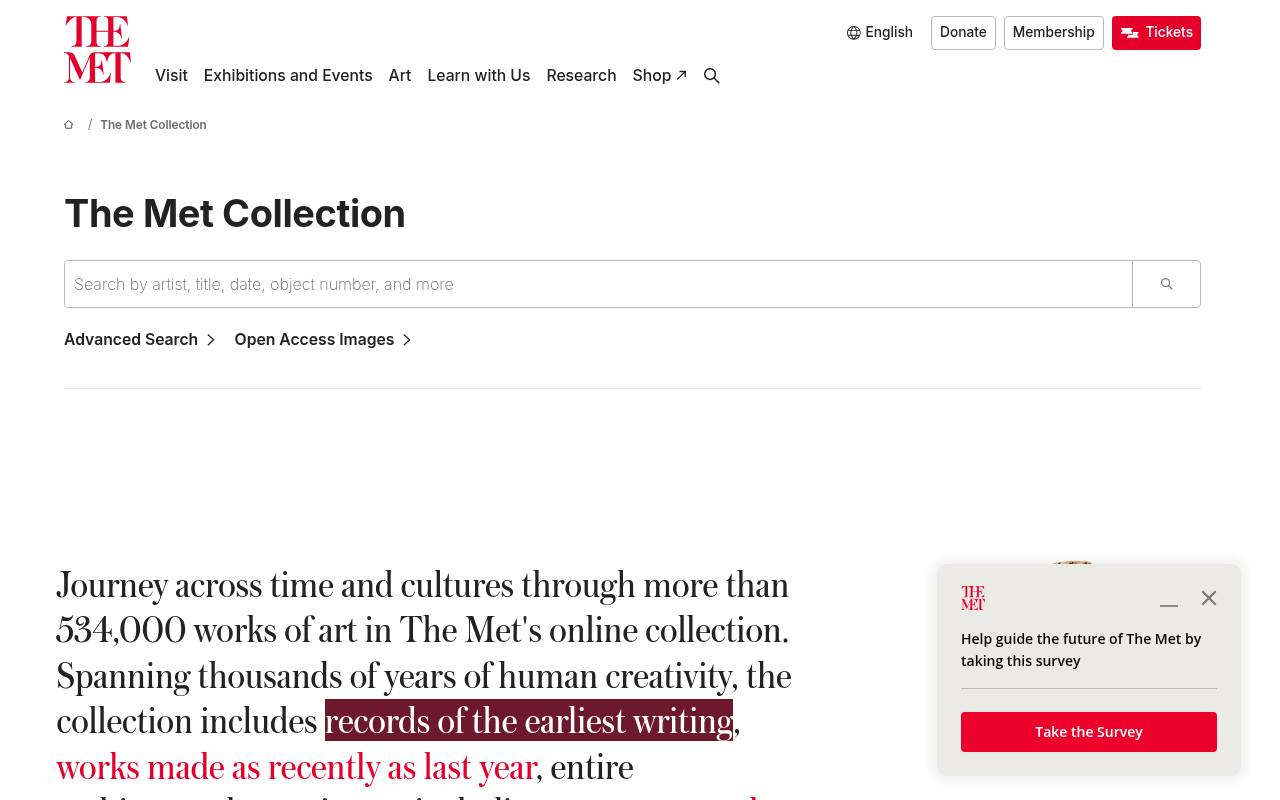
The Met pairs a vast art collection with an explicit Open Access programme, making eligible public-domain artwork images available under CC0. Its collection records are especially valuable when a project needs more than a decorative picture: artist, date, medium and cultural context can inform the accompanying copy.
Look for the public-domain designation rather than assuming every visible work is reusable. Paintings, armour, textiles and decorative objects offer very different visual directions within the same institution. Download the eligible artwork image and retain its record link so a later caption can identify the object accurately.
- Type
- Museum collection
- Best for
- Art history layouts with detailed object context
- License
- CC0 for Open Access images
- Price
- 100% free
Rijksmuseum
Dutch art archive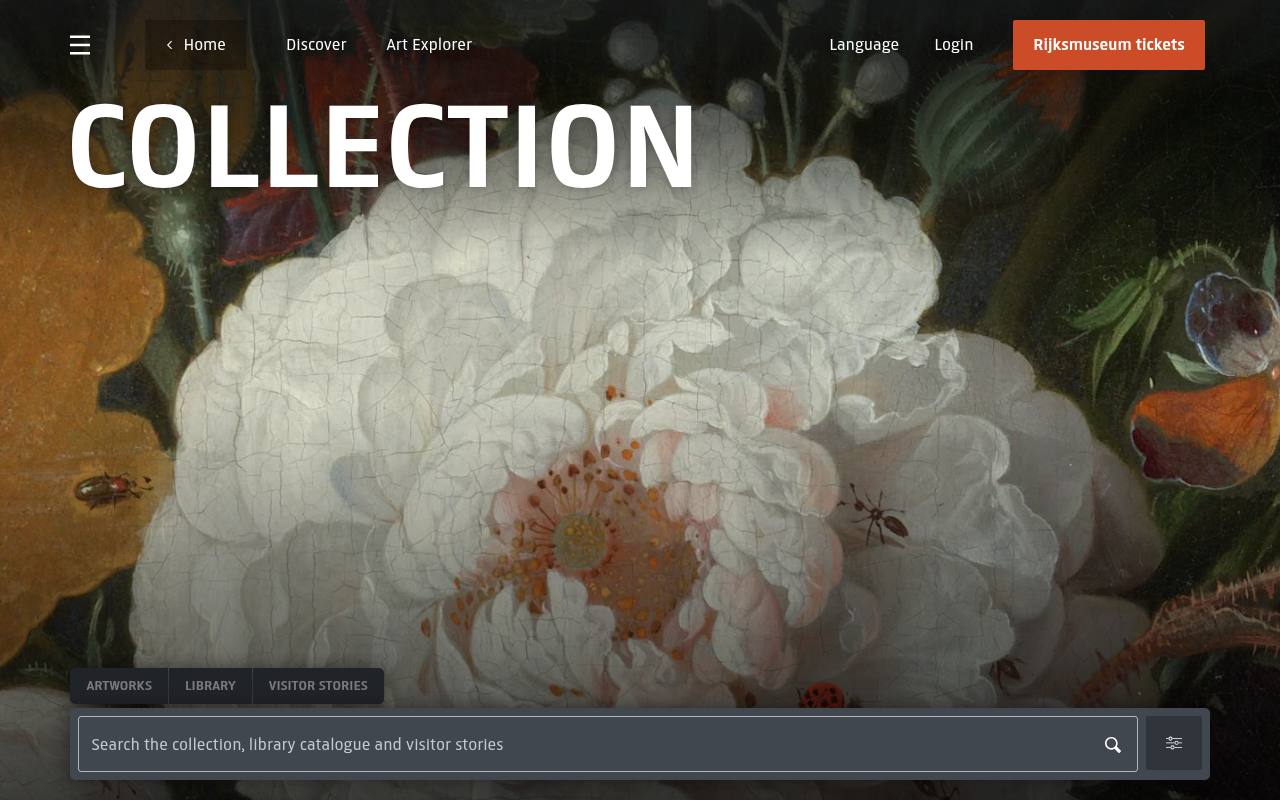
Rijksmuseum is an excellent starting point for Dutch painting, prints, historical objects and decorative arts. Its information policy supports free image reuse, including commercial applications where the relevant rights designation permits it. The essential step is to distinguish the collection's open material from items affected by third-party restrictions.
Use the individual object record to establish the work's identity and rights rather than treating an image-search thumbnail as a licence. This archive is particularly rewarding for close visual study: fabric, engraving, ceramics and painted surfaces can inspire palettes and layouts without reducing an artwork to anonymous decoration.
- Type
- Dutch art archive
- Best for
- Dutch paintings and finely detailed decorative objects
- License
- Public domain or CC0 where indicated; check record
- Price
- 100% free
Smithsonian Open Access
Cross-museum image archive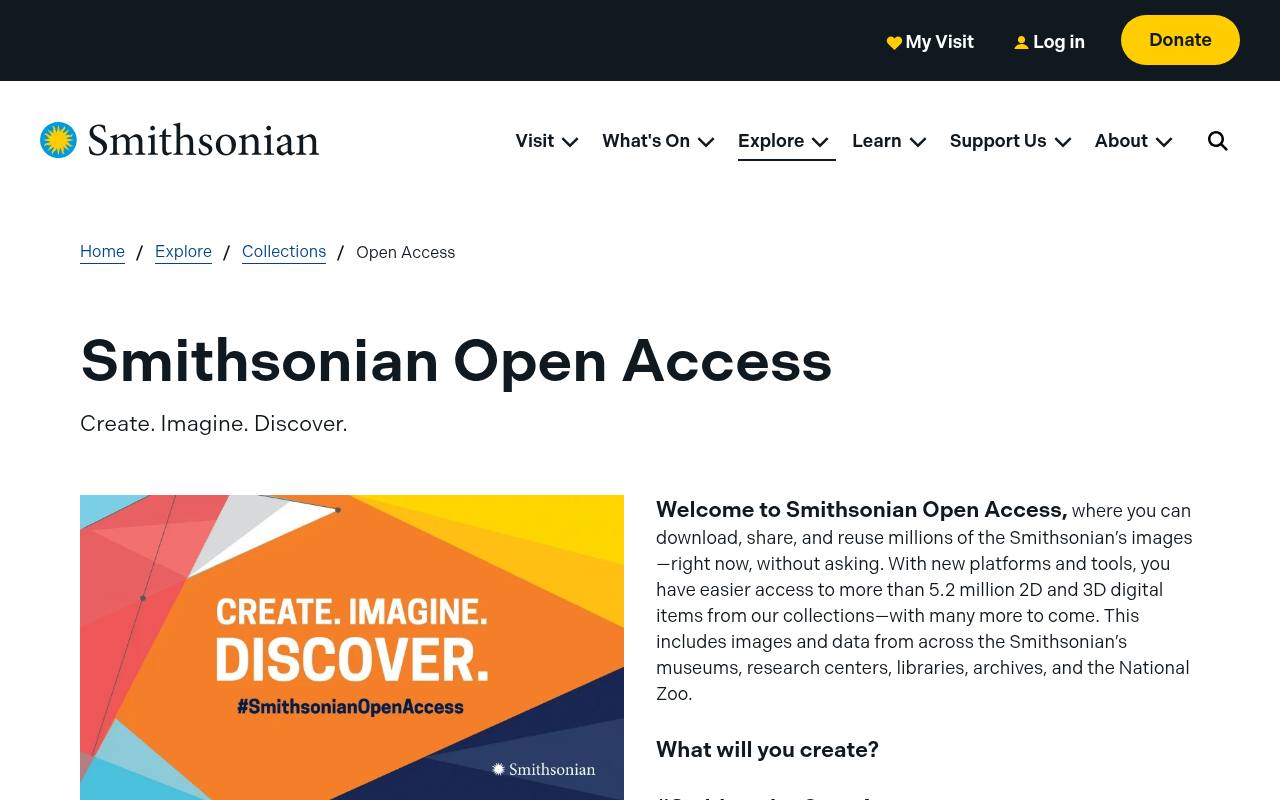
Smithsonian Open Access brings together material from the institution's museums, libraries, archives, research centres and National Zoo. That breadth makes it useful for projects crossing boundaries between science and culture, rather than focusing solely on fine art. Start with the dedicated Open Access search and confirm that your selected asset carries the CC0 designation.
The portal also points developers towards APIs and data repositories, which can support collection-based experiments beyond a single download. Rights outside copyright, including privacy or culturally sensitive uses, still deserve attention even when the downloadable image itself is openly released.
- Type
- Cross-museum image archive
- Best for
- Combining science history and cultural heritage imagery
- License
- CC0 for designated Open Access assets
- Price
- 100% free
Library of Congress
Library image sets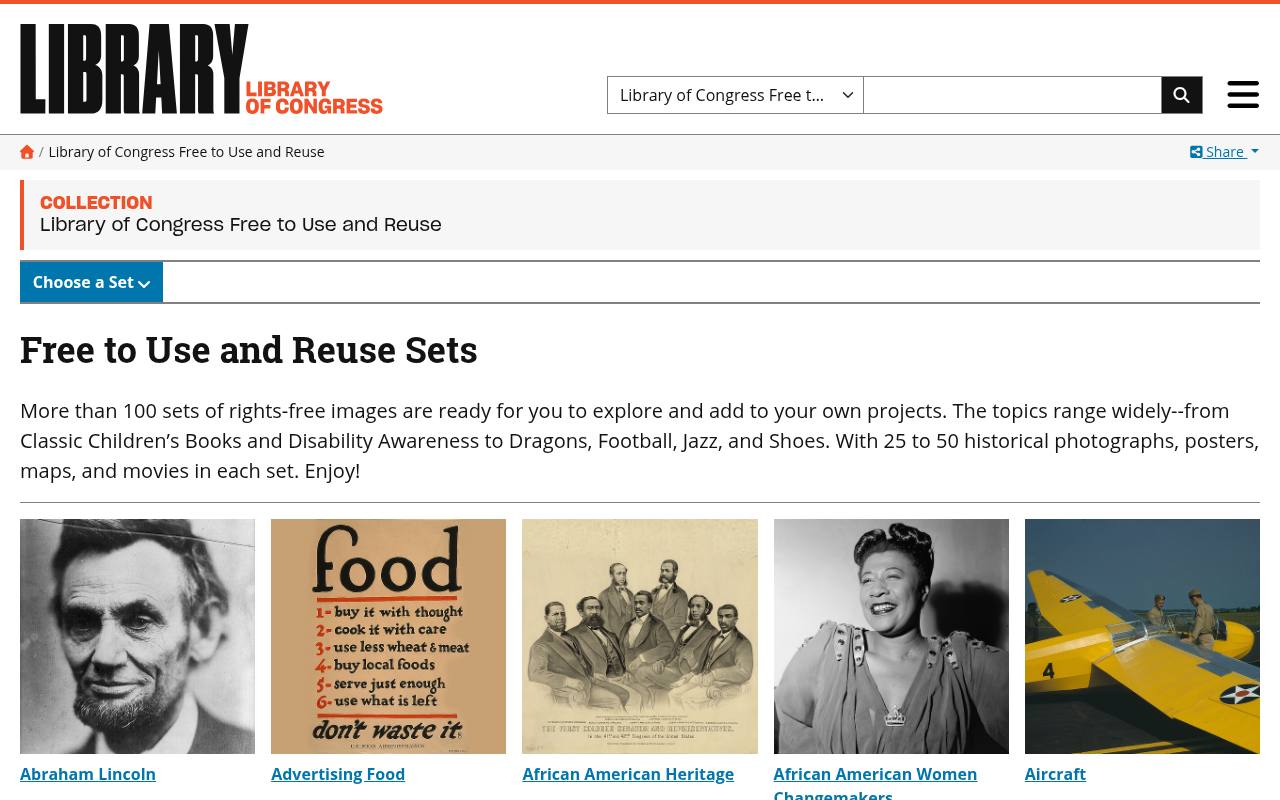
The Library of Congress offers curated Free to Use and Reuse sets, a more manageable entrance than searching its entire catalogue. Subjects range from food advertising and aircraft to African American history, with photographs, posters and maps among the available materials.
The sets are selected for reuse, but the Library's broader website is not a blanket public-domain repository. Follow each chosen image to its rights and access information and available downloads. These focused selections work particularly well for editorial concepts because their themes suggest coherent visual narratives rather than disconnected historical images.
- Type
- Library image sets
- Best for
- Finding historical photographs through approachable themed selections
- License
- Free to use and reuse selections; check rights advisories
- Price
- 100% free
Art Institute of Chicago
Museum image downloads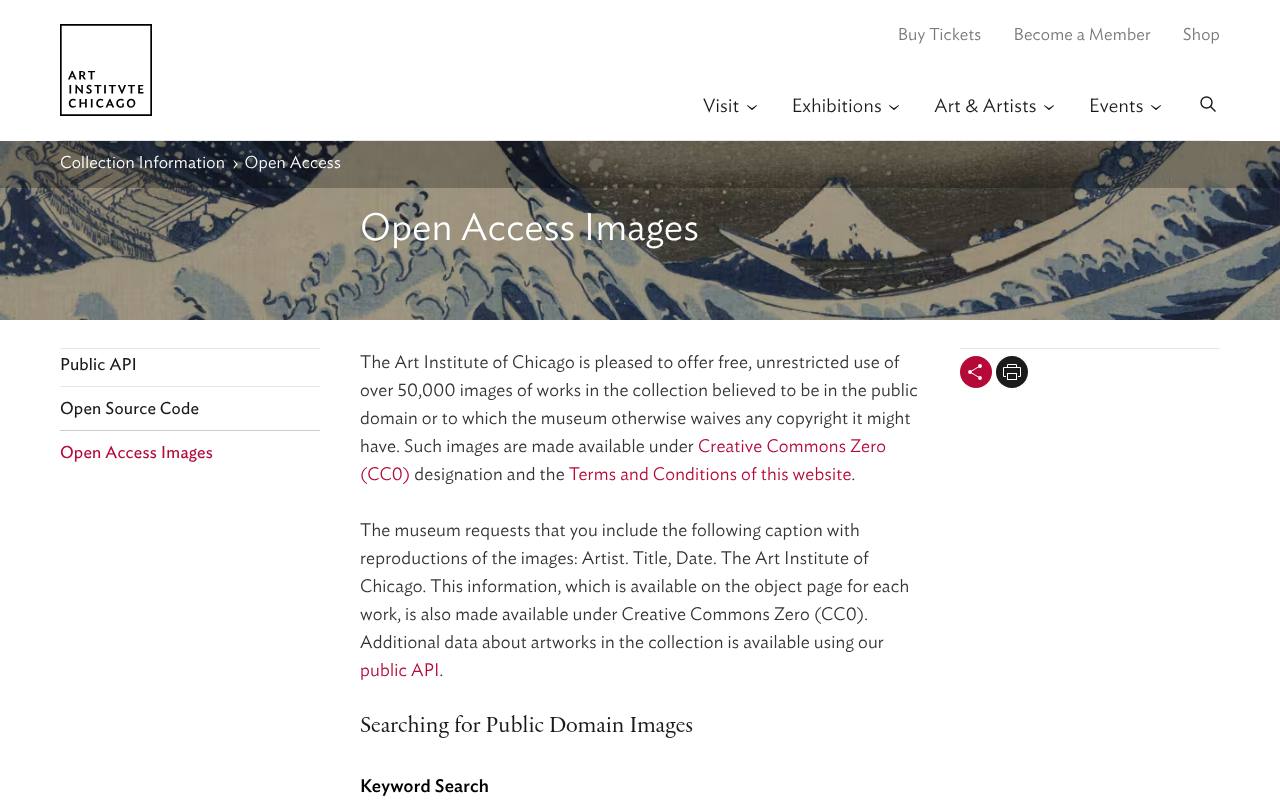
The Art Institute of Chicago explains exactly how to find its public-domain images: search for public domain or CC0, or apply the corresponding advanced collection filter. That filter can be combined with criteria such as artist, date and medium, making the archive practical when an art director already has a visual brief.
Eligible images use Creative Commons Zero, while the museum requests a caption identifying the artist, title, date and institution. The same collection also supports a public API. Keep the caption details even when attribution is not legally required; they prevent an artwork from losing its identity in production.
- Type
- Museum image downloads
- Best for
- Searching public-domain art by medium and artist
- License
- CC0 for designated public-domain images
- Price
- 100% free
Cleveland Museum of Art
Open-access museum archive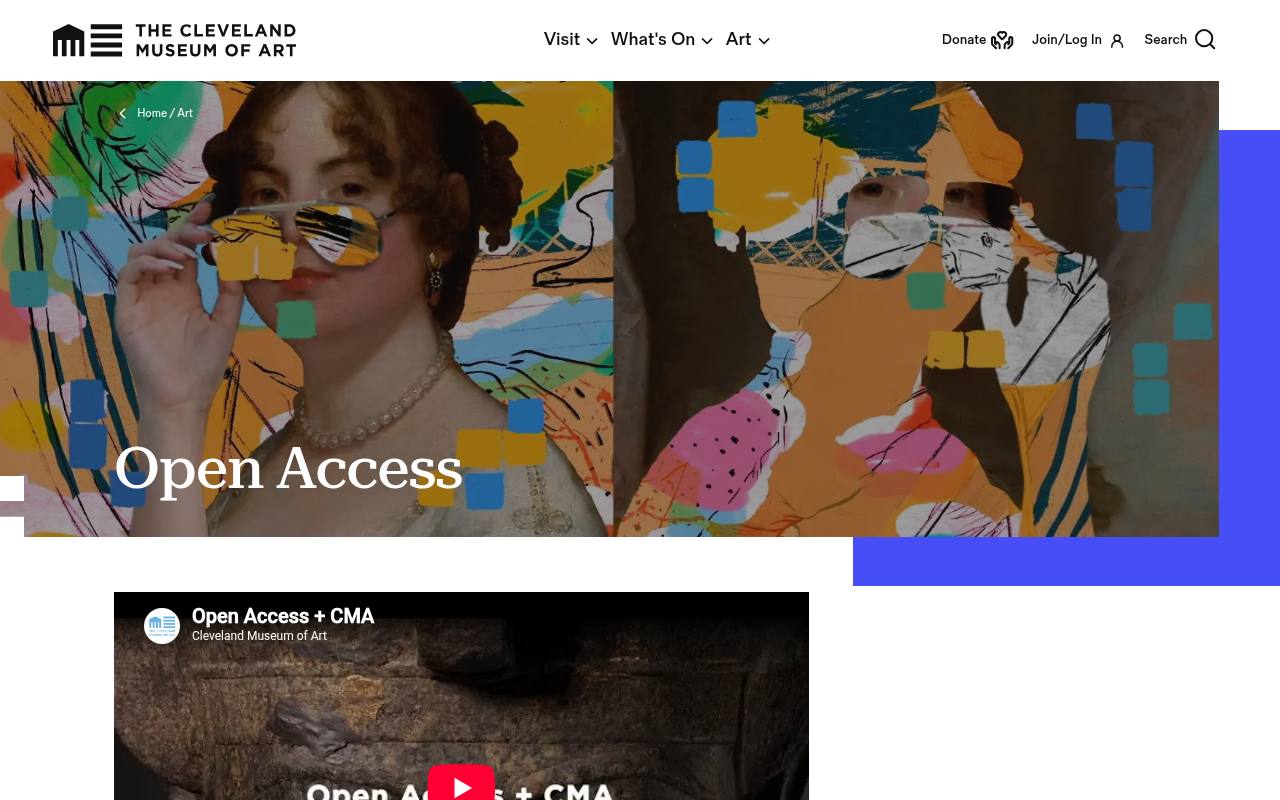
Cleveland Museum of Art publishes high-resolution images of public-domain artworks under a CC0 designation, alongside collection metadata. Its open-access page connects the policy to the online collection and answers practical questions about reuse. This makes Cleveland a strong choice when a team needs a clear institutional statement to accompany an asset decision.
Explore works across the collection rather than treating the museum as only a painting source. The distinction between eligible artwork images and all website content remains important: an open-access collection policy does not automatically cover exhibition graphics, contemporary works or unrelated photography elsewhere on the site.
- Type
- Open-access museum archive
- Best for
- Remixing artwork with clear open-access documentation
- License
- CC0 for eligible artwork images
- Price
- 100% free
National Gallery of Art
Fine-art image archive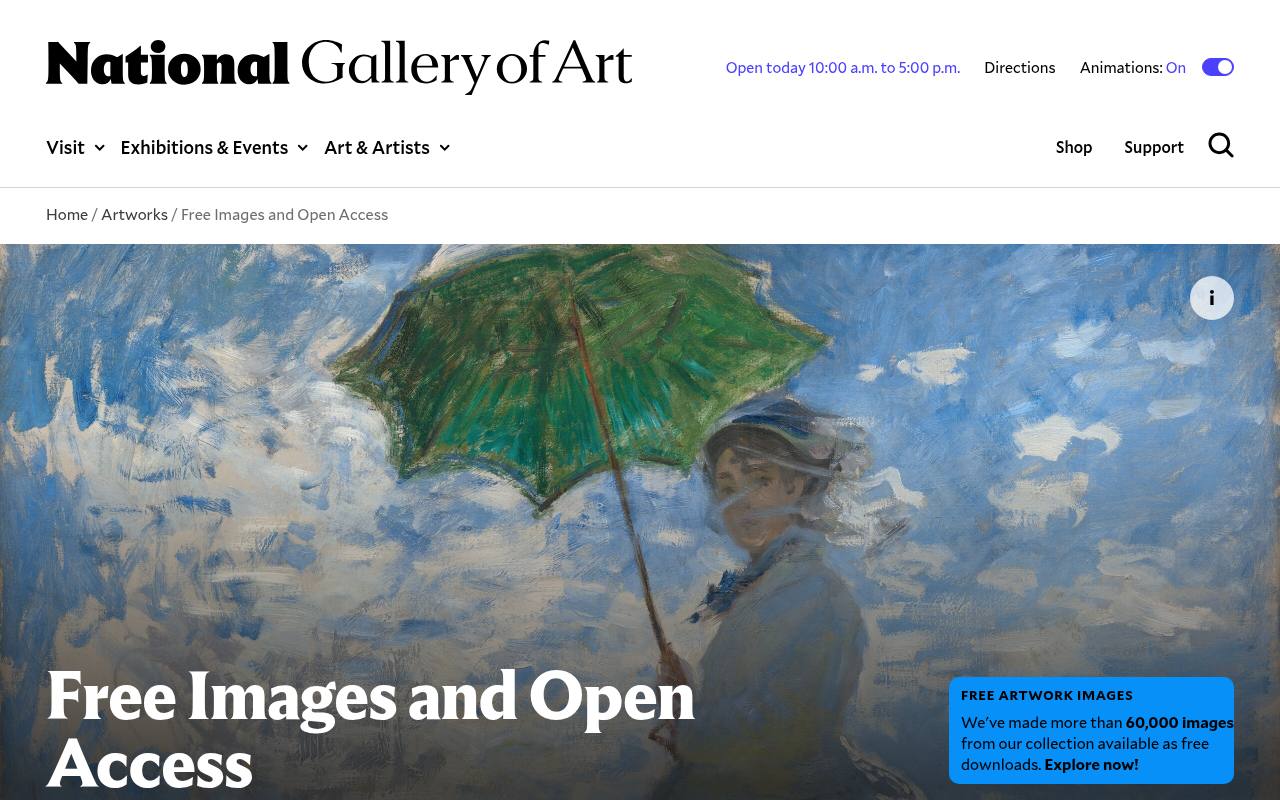
The National Gallery of Art makes its open-access downloads available directly from artwork object pages. Its policy expressly allows these images to be used free of charge in commercial and noncommercial projects, which is helpful for both publishing and design production.
The institution also releases factual collection data, but explains that its data download does not itself include the image files. Keep those two access routes separate when planning a project: use object pages for pictures and the data programme for structured research. This source is especially convenient when you need an artwork and dependable descriptive information together.
- Type
- Fine-art image archive
- Best for
- Downloading artwork directly from authoritative object pages
- License
- Free commercial and noncommercial use for open-access images
- Price
- 100% free
Getty
Art and archival image collection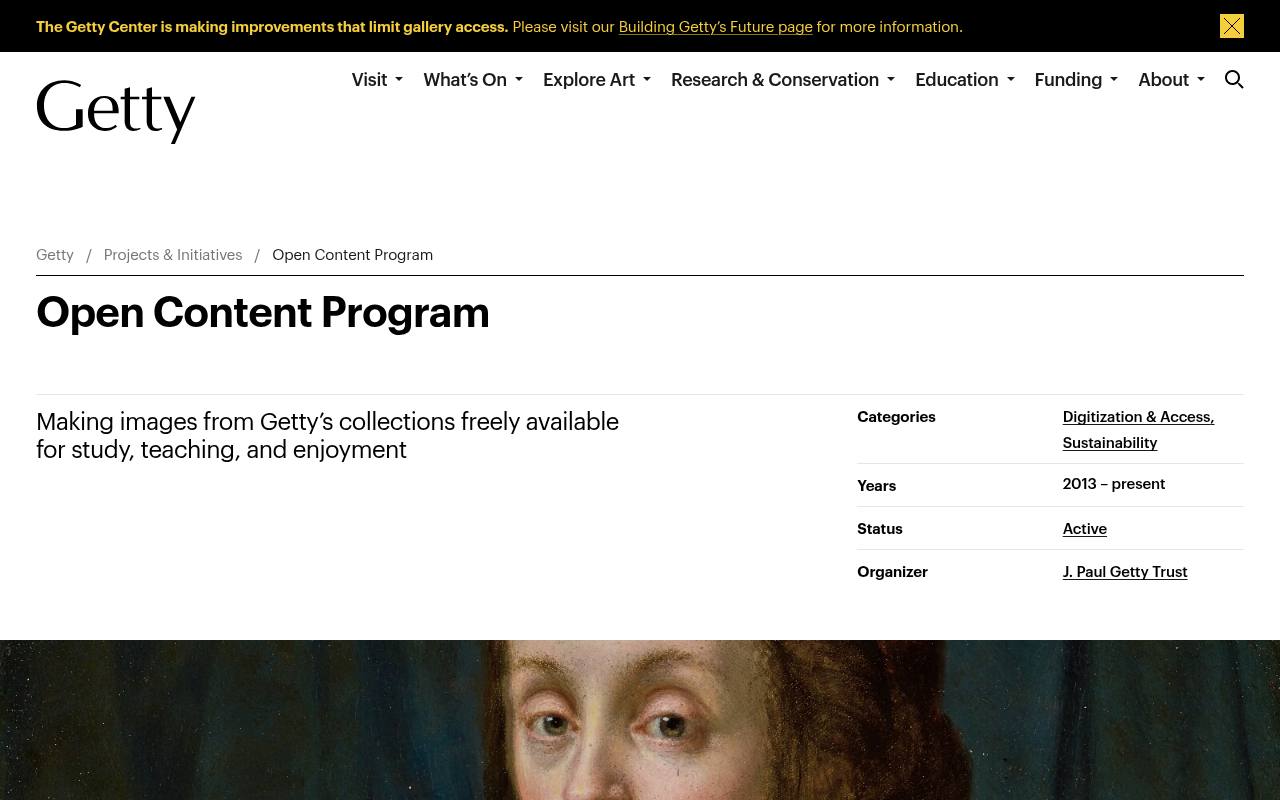
Getty's Open Content Program spans both museum artworks and research collections, including antiquities, manuscripts, paintings, photographs, prints and archival material. Its programme page explains that public-domain images marked with the CC0 icon can be downloaded without fees for commercial or noncommercial use. That combination gives researchers access to contextual documents as well as finished artworks.
Follow the programme's collection links and inspect the CC0 public-domain icon on the chosen material. Getty is particularly useful for a historically grounded publication where a decorative object, an old photograph and a related archival image need to sit within one coherent visual argument.
- Type
- Art and archival image collection
- Best for
- Art publications mixing museum and archival material
- License
- CC0 for marked Open Content images
- Price
- 100% free
The New York Public Library
Library digital collections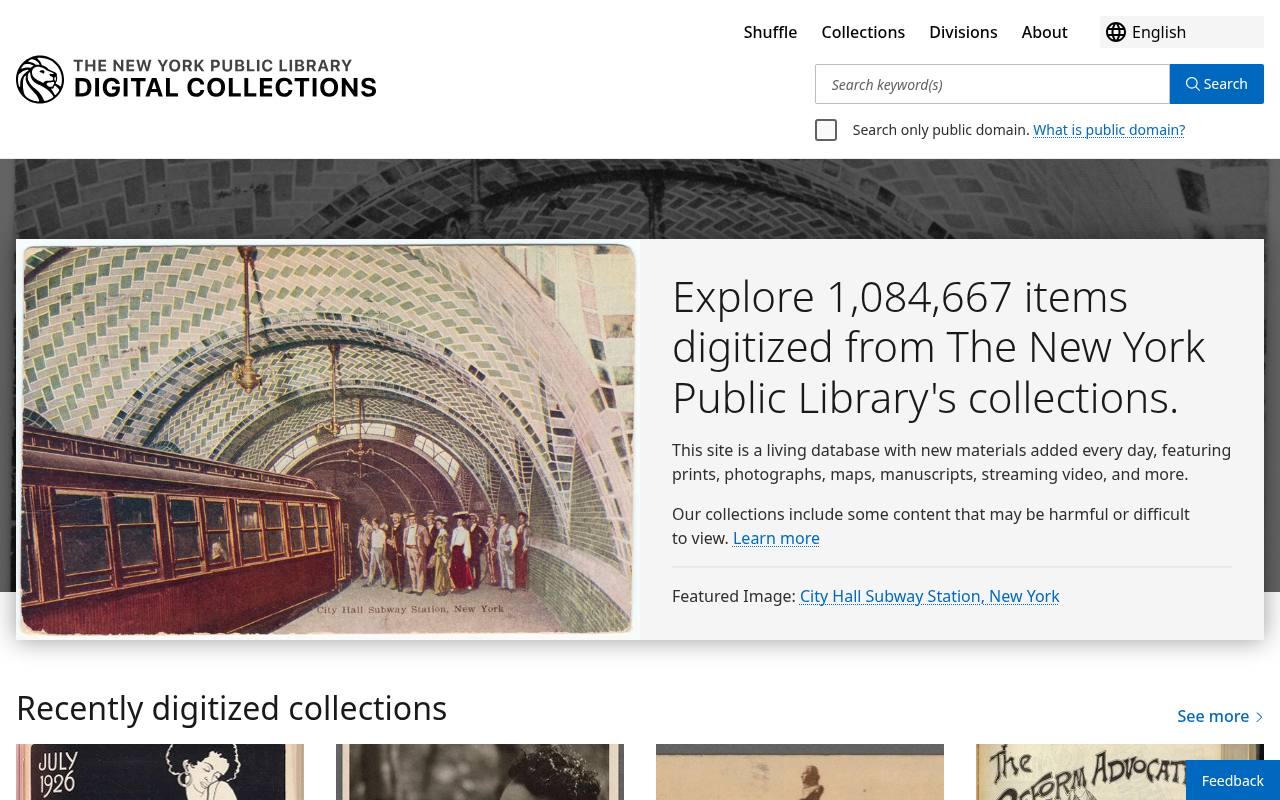
The New York Public Library's Public Domain Collections page leads into digitised materials that can be shared and reused without permission or usage restrictions. The library makes the highest available resolution downloadable for those designated items, a useful advantage when a small web preview hides fine print or engraving detail.
Its reuse projects also demonstrate how historical collections can become contemporary creative work. Stay within the public-domain selection rather than extending that status to every Digital Collections record. Maps, illustrated material and historical ephemera are promising starting points for layouts that need texture with identifiable provenance.
- Type
- Library digital collections
- Best for
- Vintage maps prints and illustrated editorial projects
- License
- Public domain for designated collection items
- Price
- 100% free
National Archives
Government photographic archive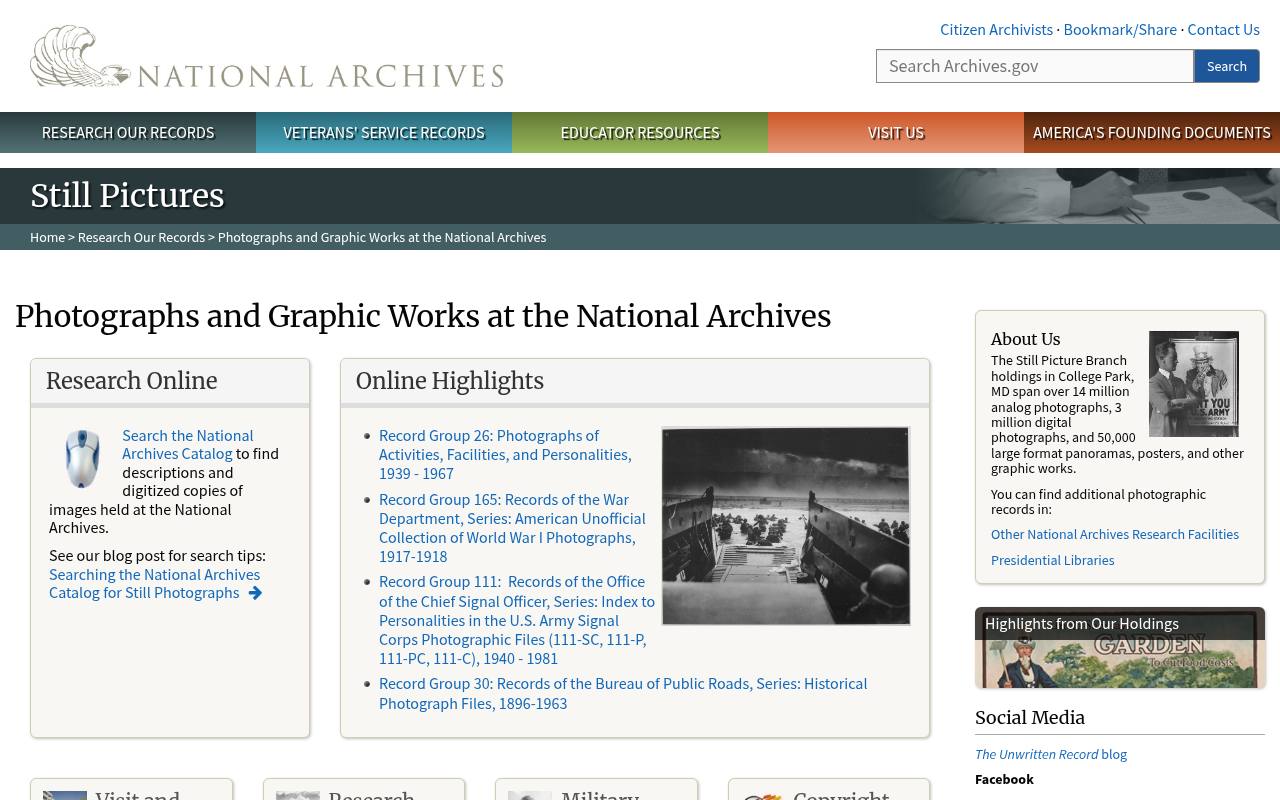
The US National Archives' still-picture resources open a route into government photography and historical records with substantial documentary context. Many works created by federal employees in their official duties are public domain, but donated collections and other holdings can carry restrictions.
Use the page to reach catalogue records and examine the use restrictions before selecting an image. This is a research-oriented source, not a promise that every search result is cleared stock. Preserve the catalogue identifier and originating agency where available; those details help readers understand the circumstances behind a historical photograph and support reliable future sourcing.
- Type
- Government photographic archive
- Best for
- Documentary imagery with archival provenance and identifiers
- License
- Many federal images public domain; record restrictions vary
- Price
- 100% free
How to choose a free image archive
Start with the kind of evidence your project needs. Museum collections are strong for objects and artworks, library collections for maps and printed material, and government archives for documentary records.
Search two complementary institutions rather than repeating the same broad query everywhere. A subject-led choice usually produces more distinctive results than simply choosing the first attractive thumbnail.
Read the image rights, not just the page title
A CC0 designation is a deliberate waiver or dedication covering the indicated material, while a public-domain statement describes copyright status. Neither should be inferred from the absence of a watermark.
Save the rights wording shown on the asset record, and investigate any credit line that names an outside photographer, lender or rights holder before using the image.
Understand government image exceptions
The federal-work distinction is useful but limited: not every image hosted by a US government organisation was created by a federal employee in official duties.
Contractor photographs, donations and third-party reproductions may follow different rules. Read record-level restrictions and consider the territory in which you will publish, especially for international campaigns or commercially distributed physical products.
Download for the final output
Choose a suitable resolution after deciding how large the image will appear. A screen thumbnail cannot reliably support a full-page print layout. Inspect the downloaded file at working size for compression, missing edges and scanning artefacts.
Keep the original file untouched, then make separate cropped and colour-adjusted versions so later layout changes do not require finding the source again.
Write captions that preserve context
Even where a licence does not demand credit, a descriptive caption improves the work. Identify the creator when known, the title or subject, the date and the holding institution.
Avoid presenting uncertain historical descriptions as settled facts. If you substantially crop, recolour or combine an image, make that transformation clear where readers could otherwise mistake your design for the original object.
Build a lightweight provenance record
Store a source record beside each download containing its page URL, institutional identifier, rights statement and retrieval date. This is more useful than an image filename alone, particularly when a colleague inherits the project.
For a collection-based publication, a small spreadsheet can also track which images have captions, which require additional review and which final exports contain each asset.
Consider rights beyond copyright
Public-domain status does not remove every ethical or legal concern. A photograph may depict identifiable people, sacred objects, sensitive locations or a trademark.
Do not imply that a museum, historical subject or living community endorses a product because its image can be reused. Ask for specialist advice when a proposed commercial use depends on personality rights, sensitive claims or culturally restricted material.
Prepare accessible and efficient web images
Write purposeful alt text describing what matters to the surrounding content, rather than copying a long catalogue entry into the accessibility field. Put detailed provenance in a visible caption or credits area.
Resize web derivatives to the actual layout and compress them appropriately, keeping archival masters outside the page delivery path so readers do not download enormous files unnecessarily.